
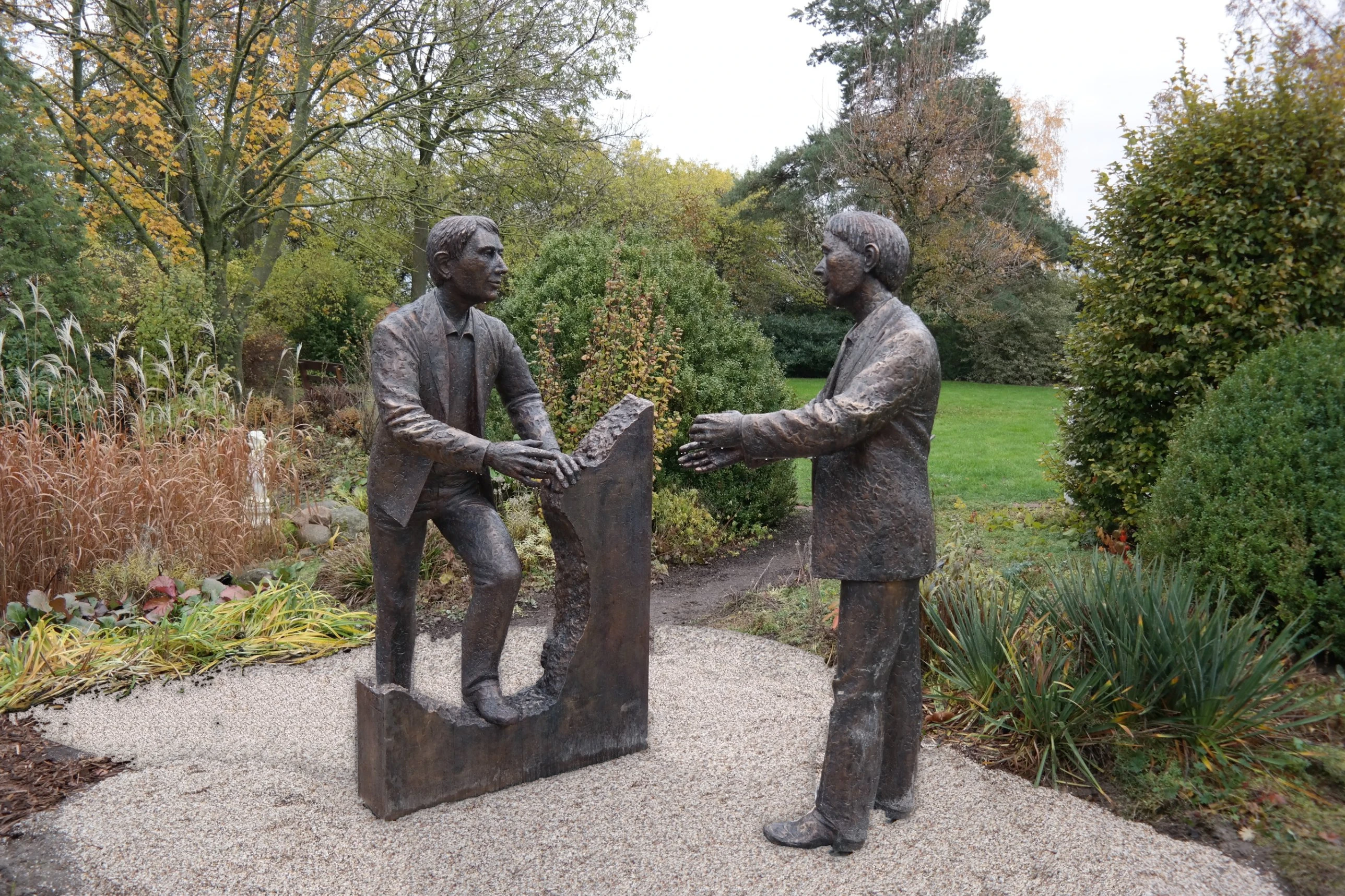

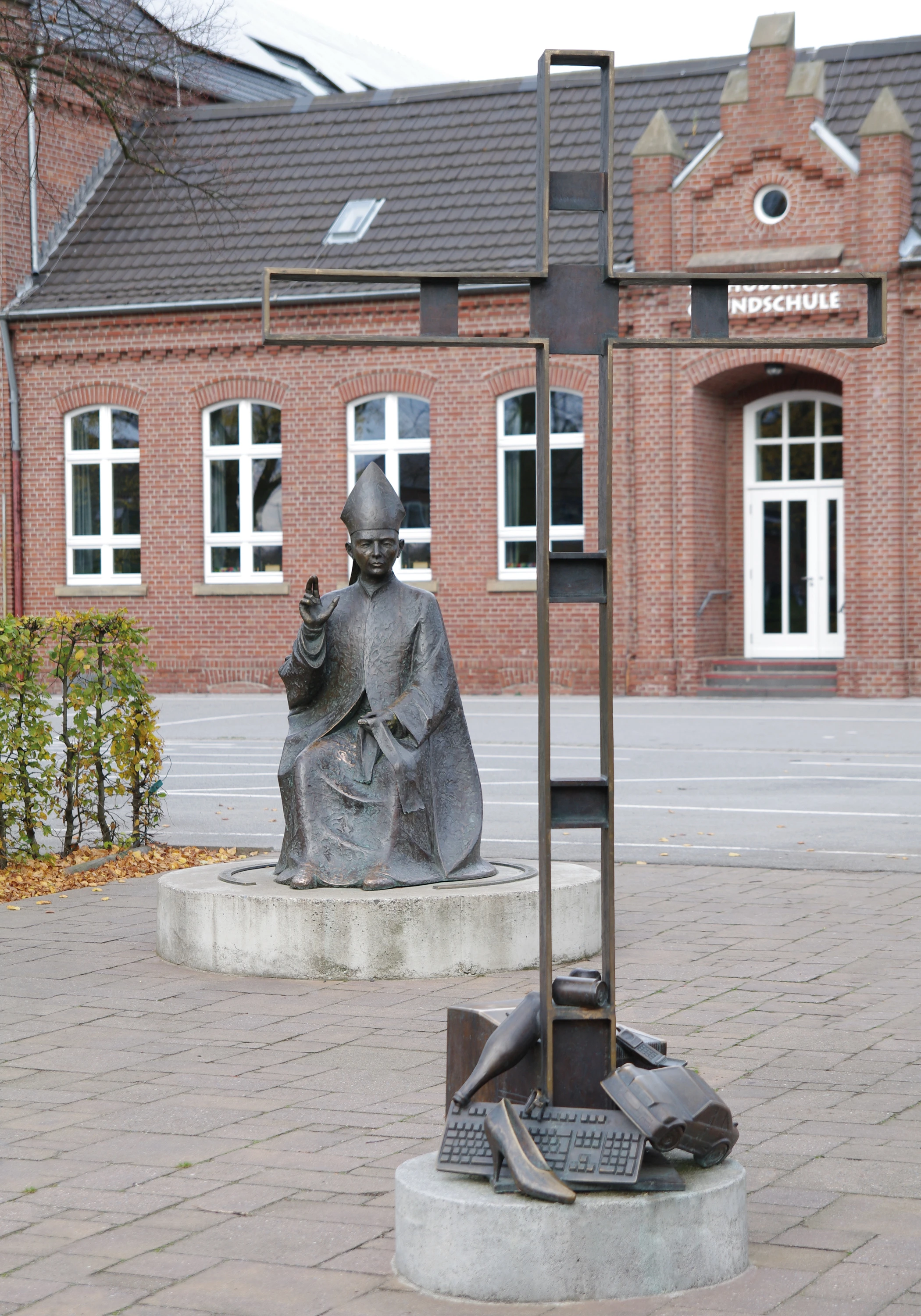
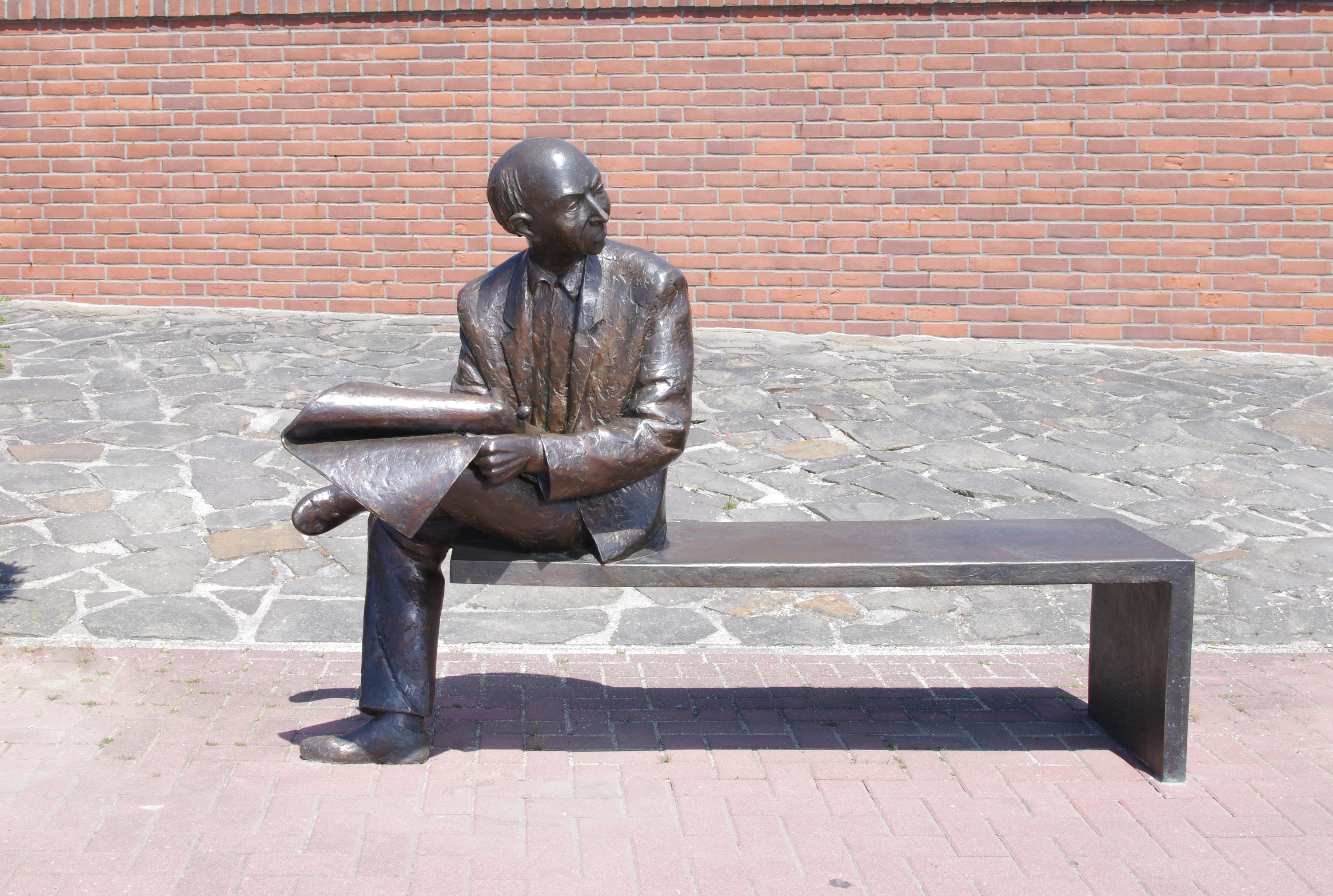
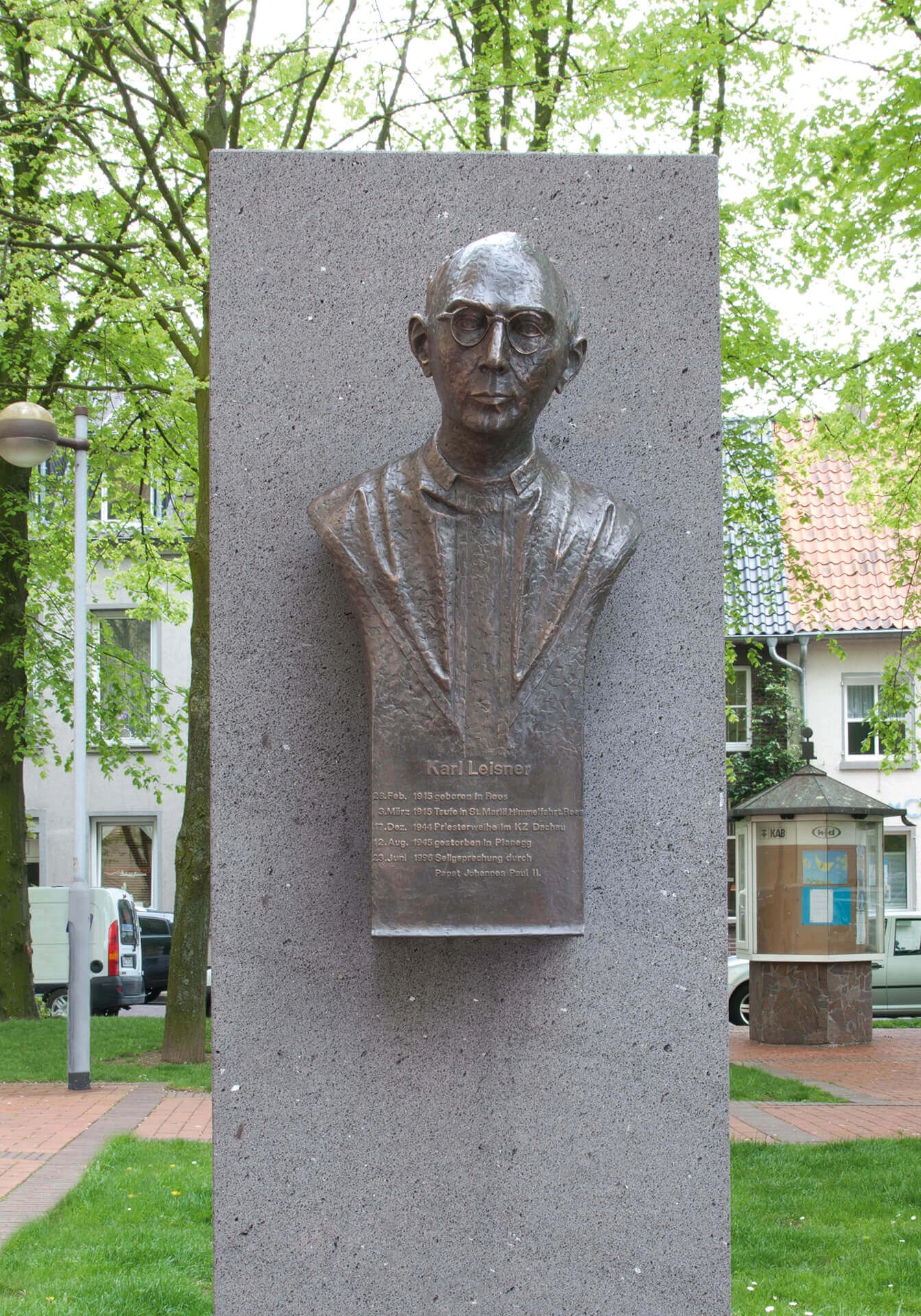
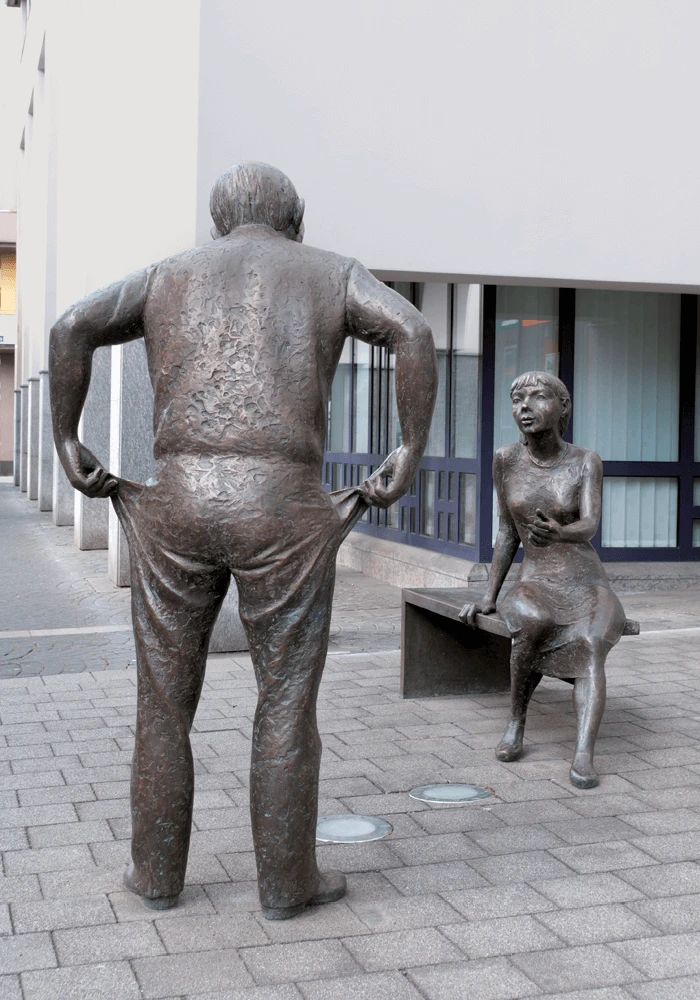
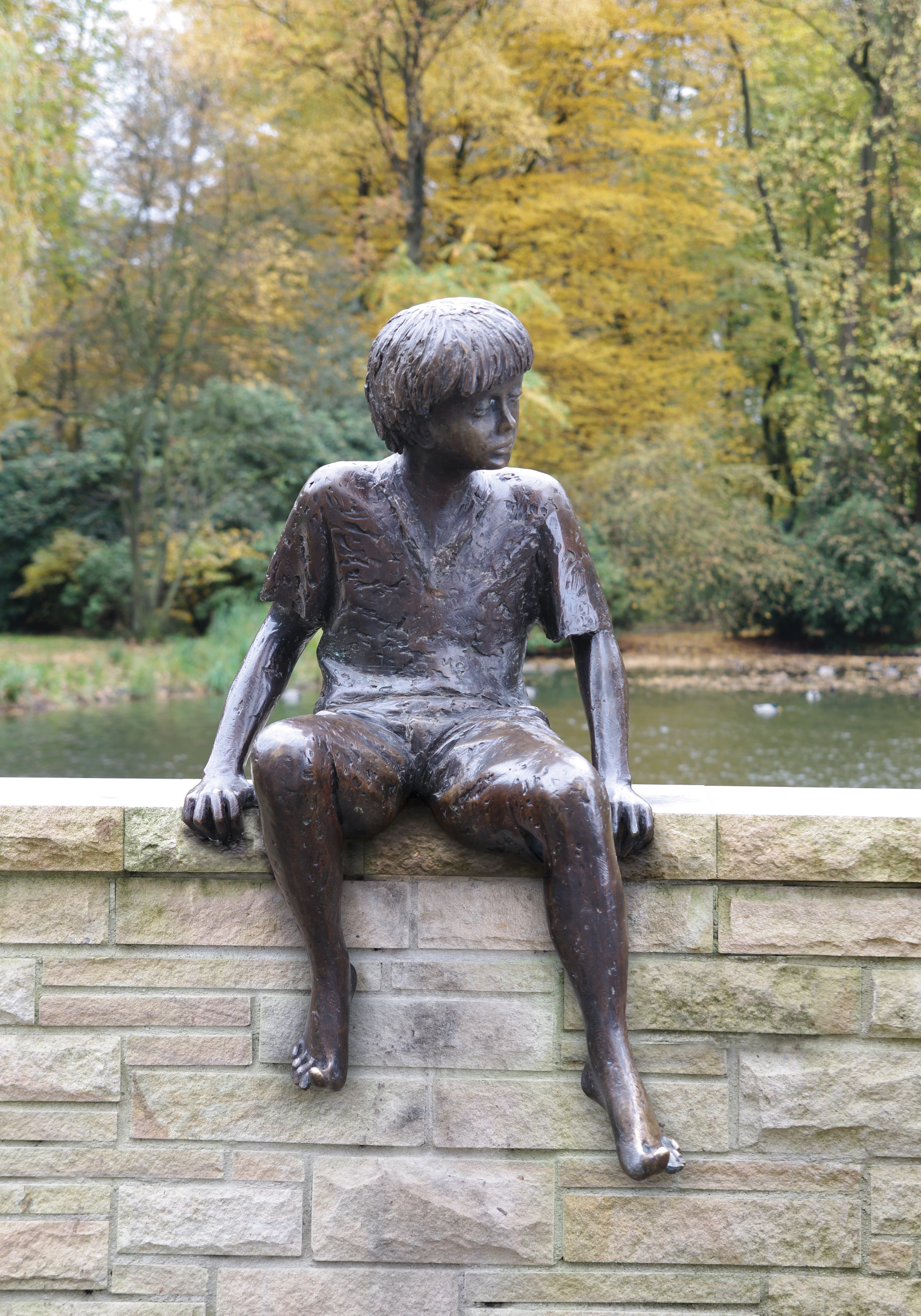
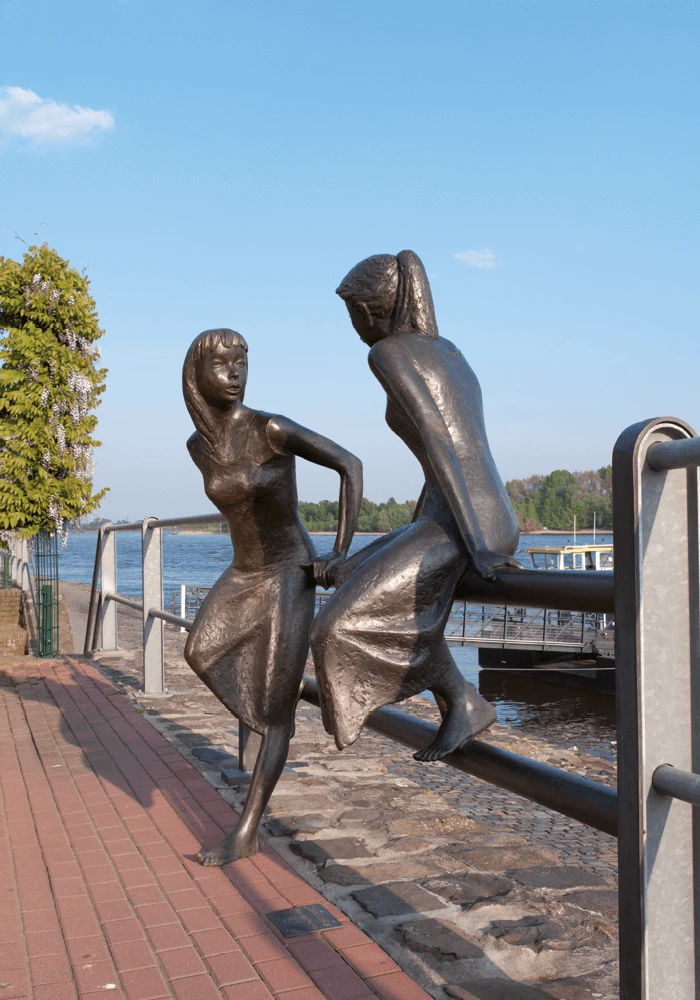

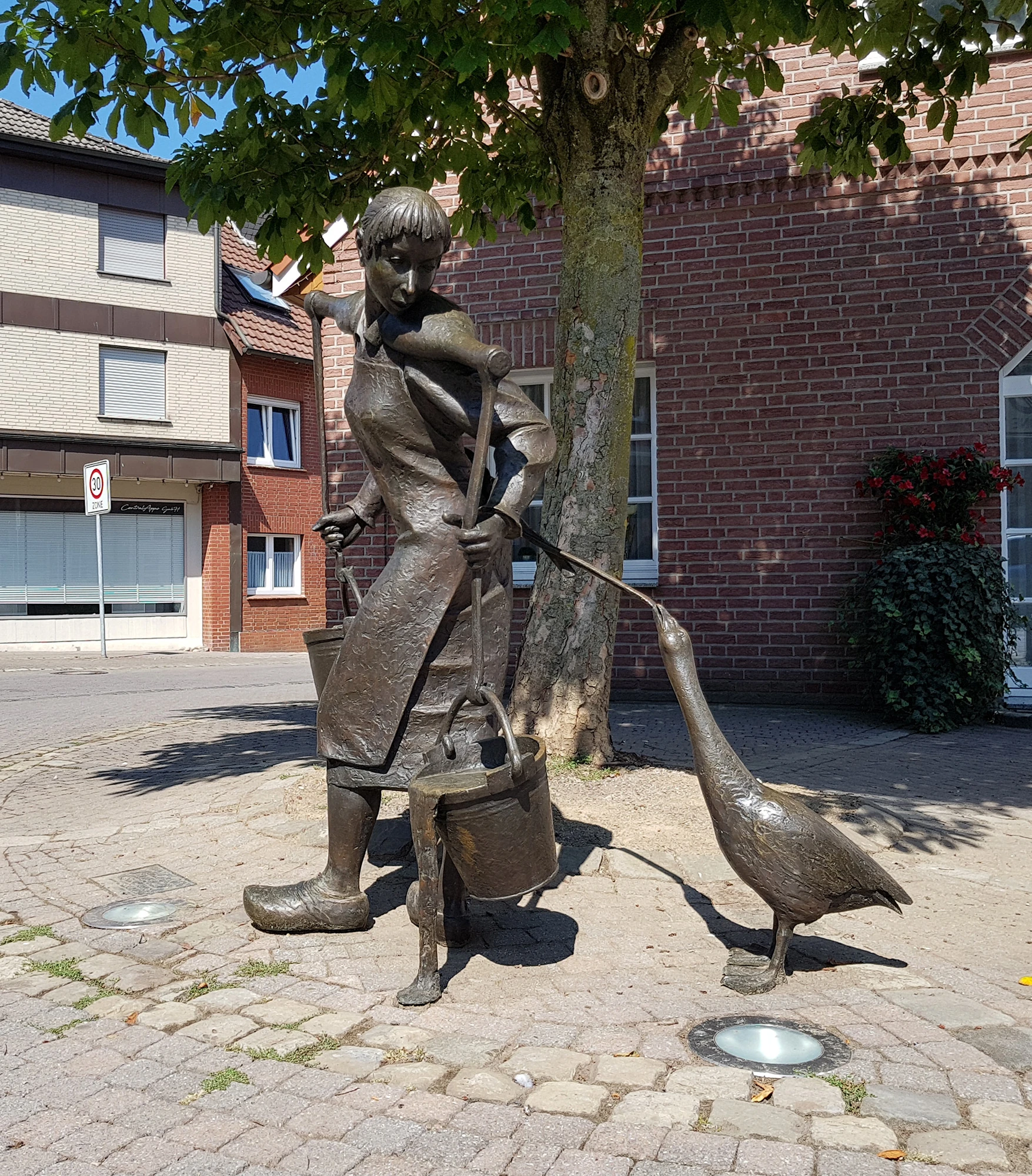

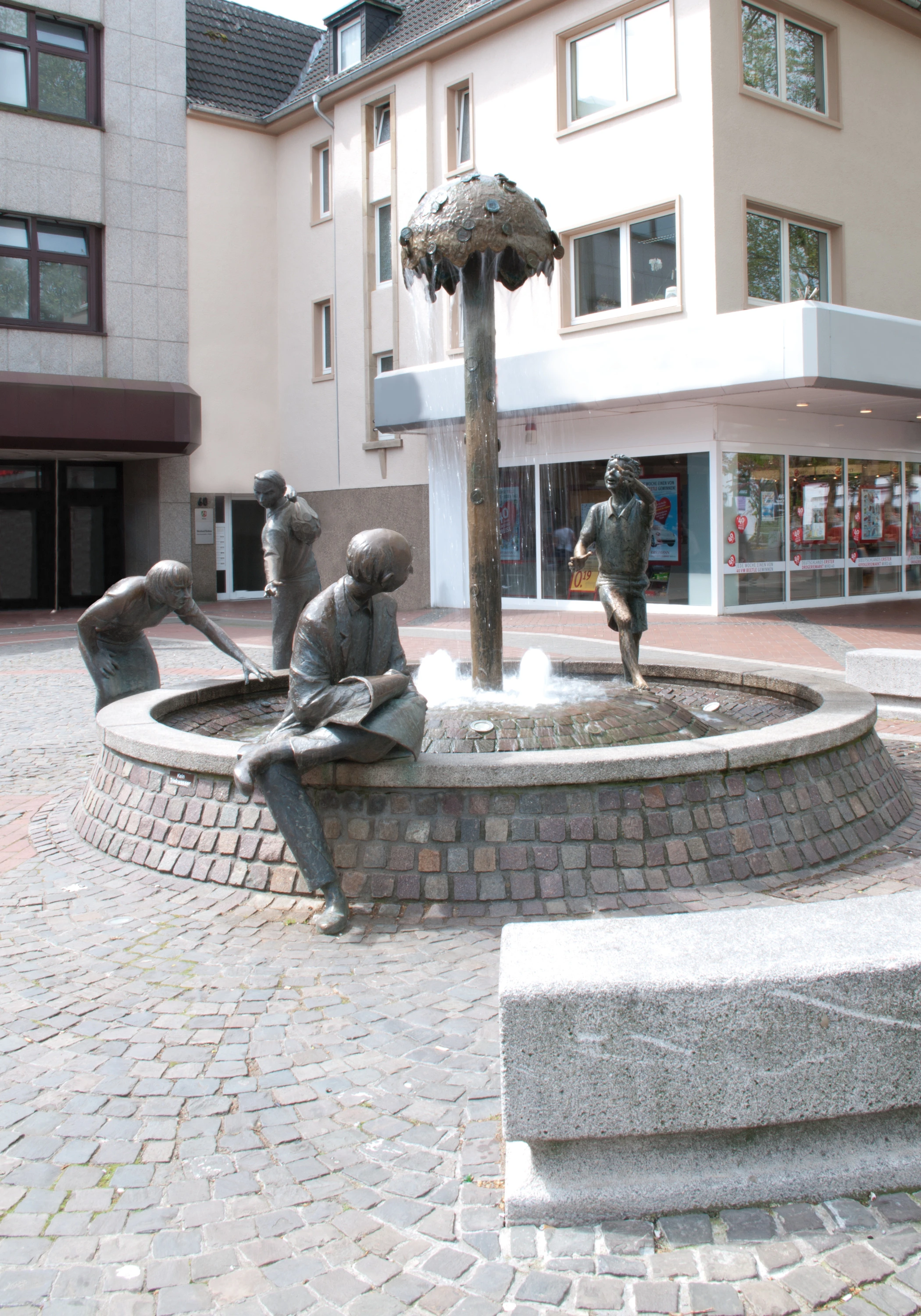


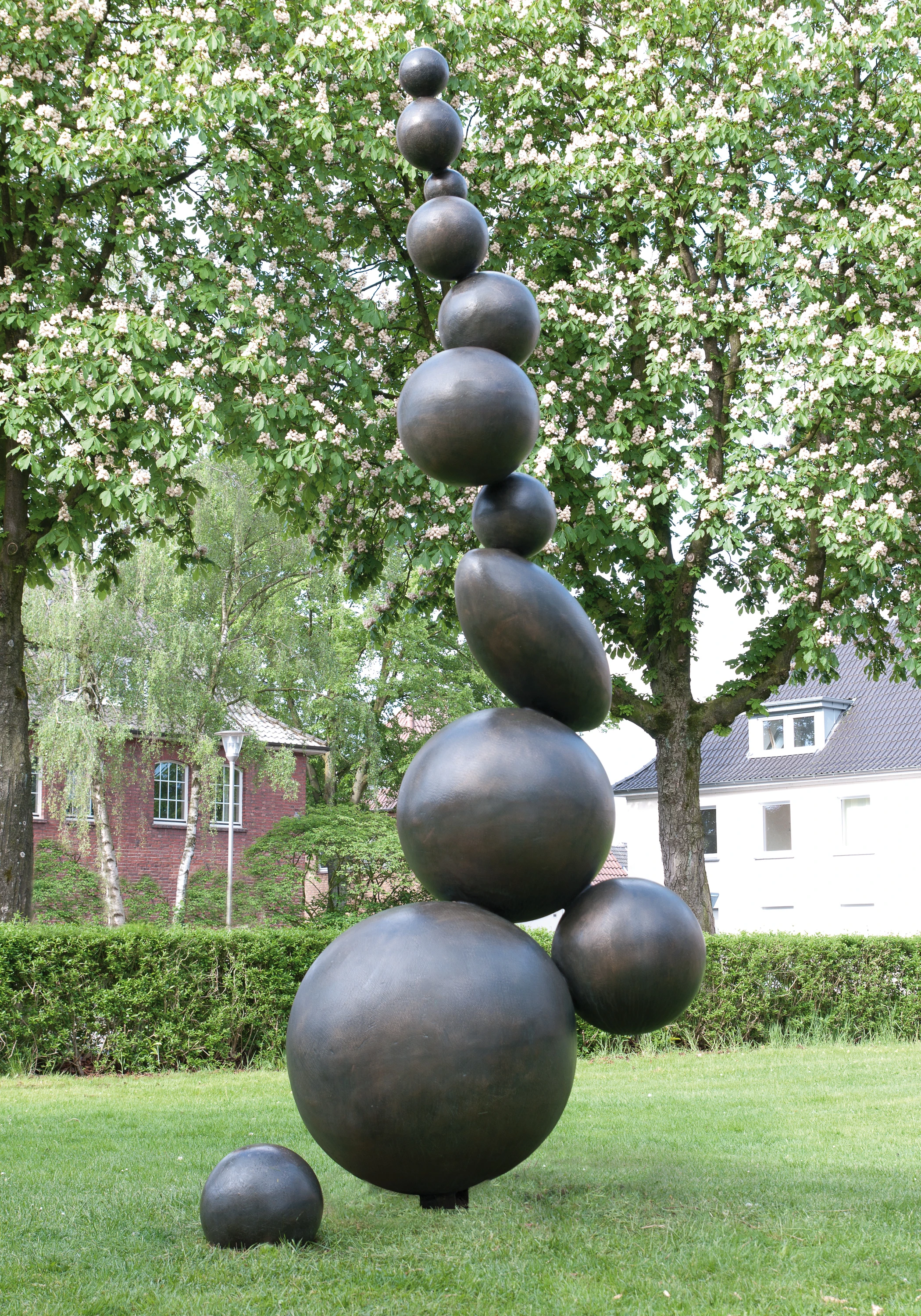


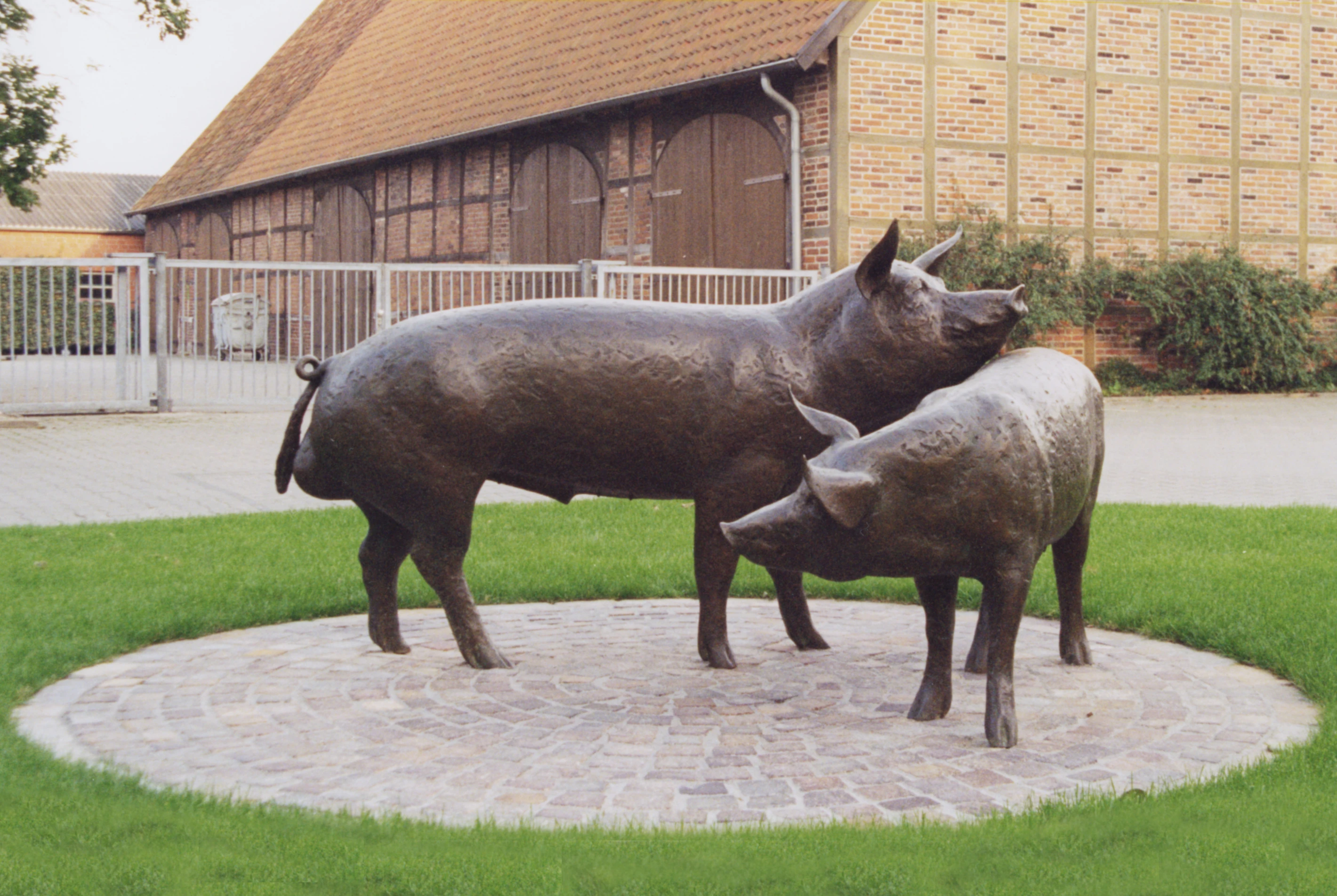

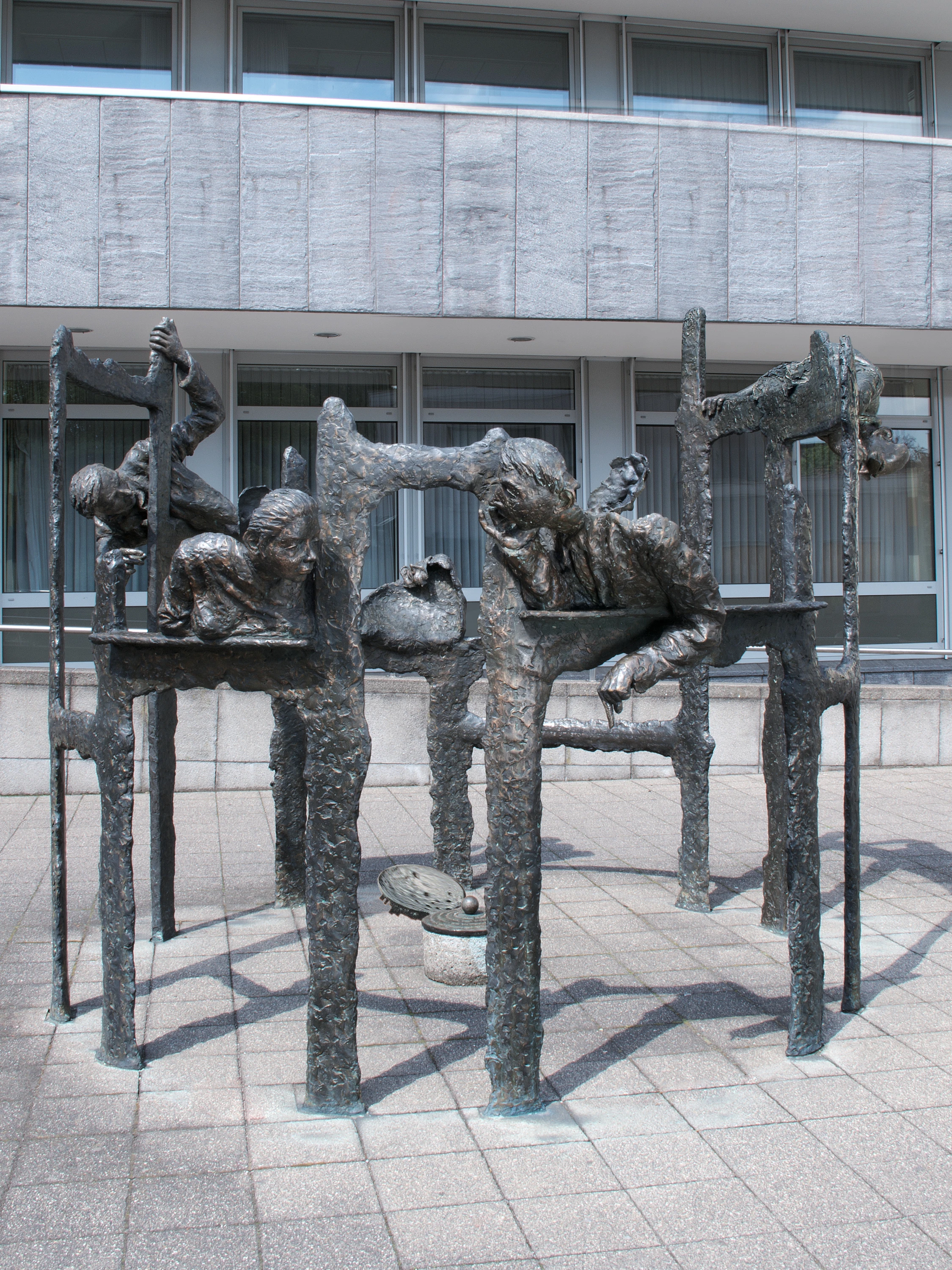

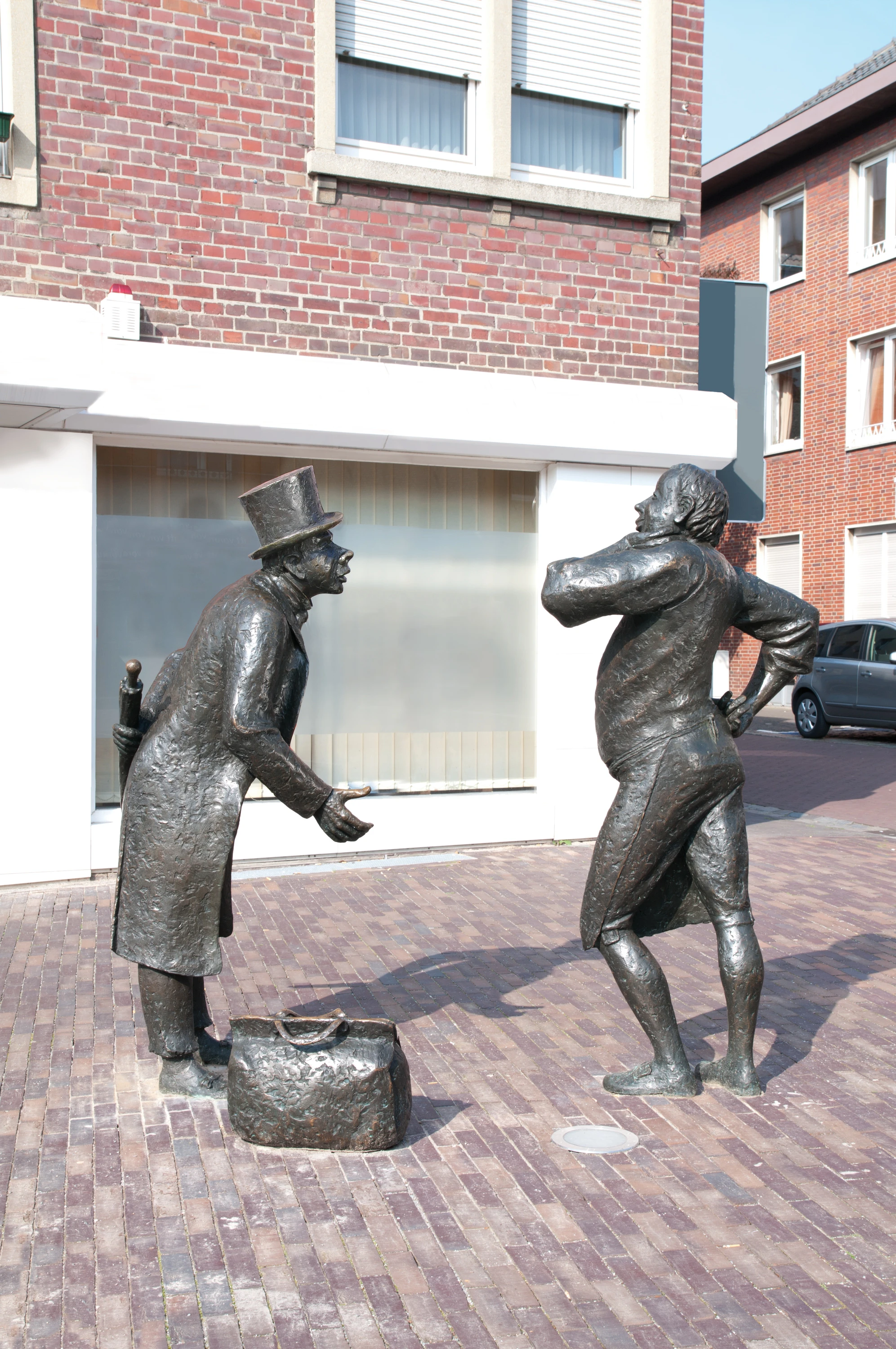

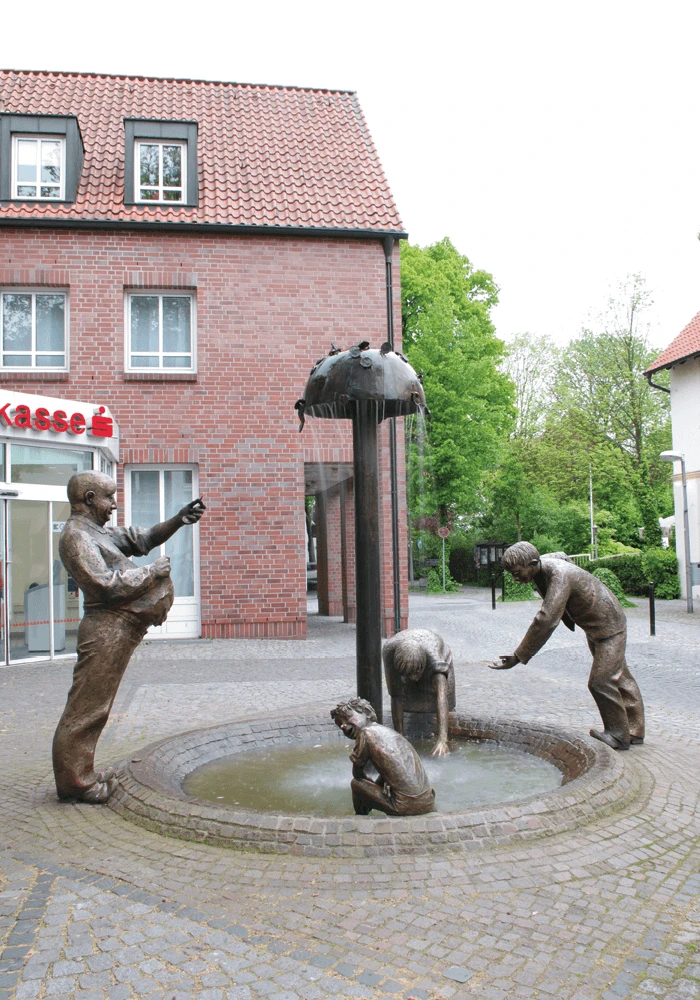

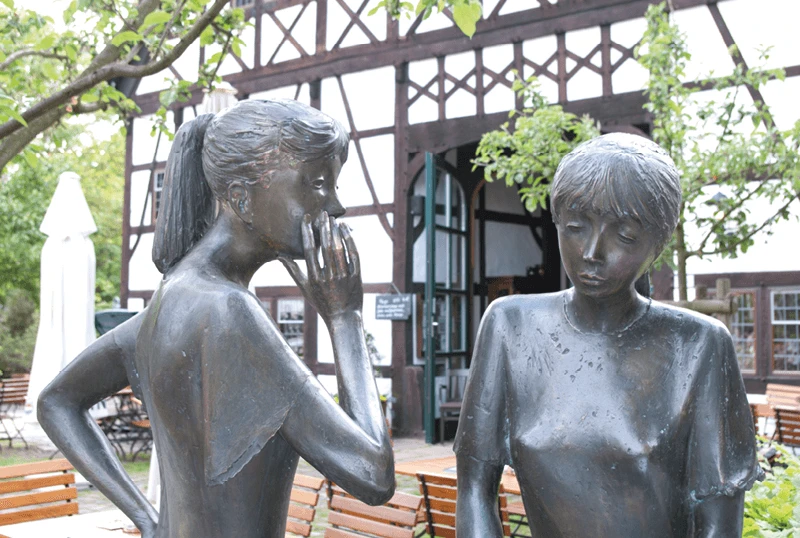
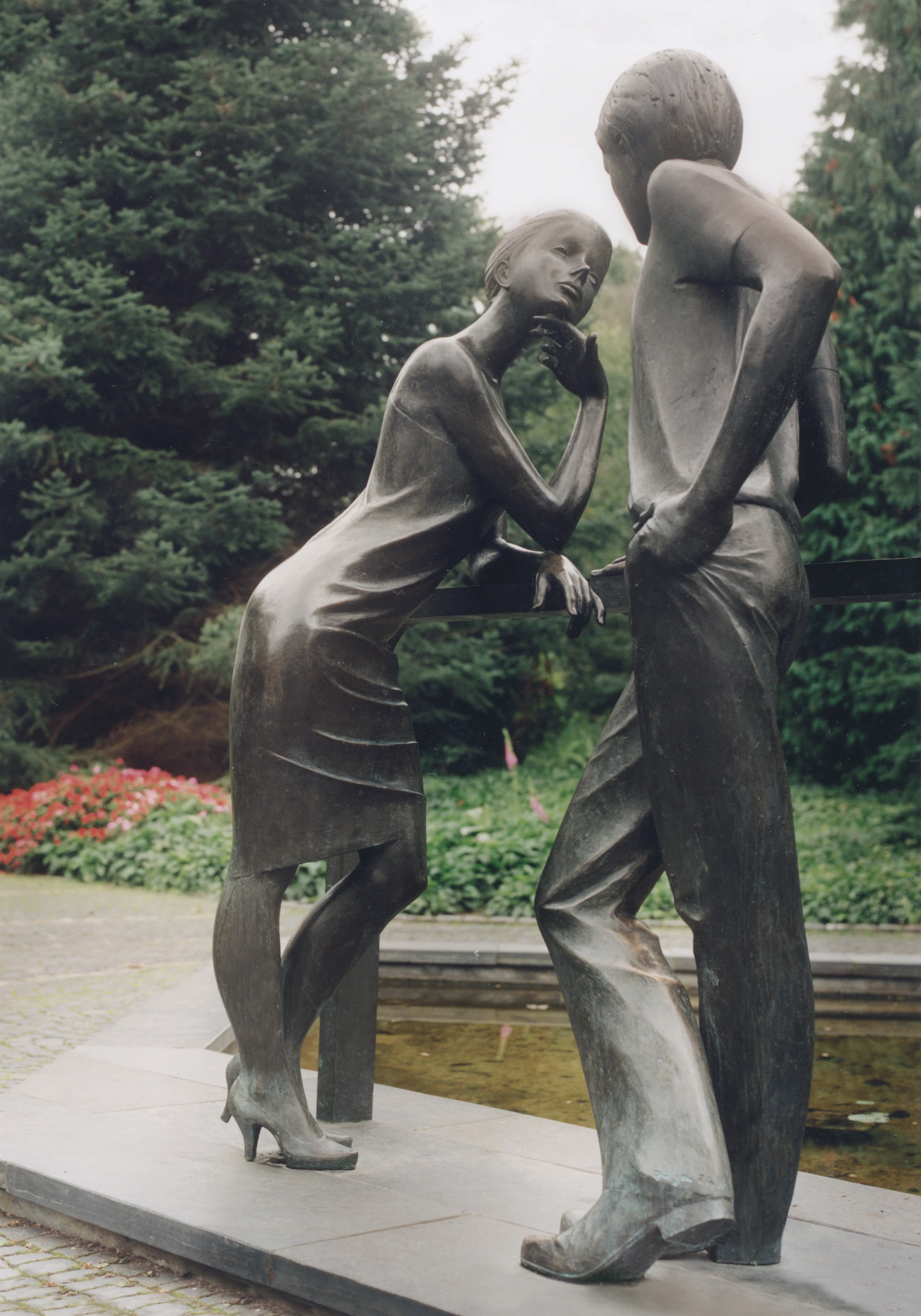
Ebert’s works always have an architectural reference: they suggest railings and embed benches and columns in the composition (and in its statics as well). Typical examples of this form of expression are his works “Money in Changing Times”, “The Bonds of Friendship”, “Taking Time”, “Circle of Life” and “Fountain of Life”. What stands out is his ability to give the whole a frame, in order to open up spaces or to reveal scale by adding objects of reference.
Before Jürgen Ebert gives his ideas sculptural form, he takes a great deal of time to let the spaces take effect on him, to perceive them and already to imagine exactly how and where a single sculpture or an ensemble of sculptures will later stand. This power of imagination accompanies and shapes his later work in his own studio, because every step of the design requires a feeling for how the sculpture will later shape, complement or define the space. His sculptures and groups of figures thus develop a relationship of their own with the space around them; they also serve to create a connection between the “here and now” and the “there and then”.
His works of art relate to their surroundings in many ways. They blend into their surroundings, or Jürgen Ebert deliberately uses them to create a contrast. On the surface, the relationship is established by form. In the background, and often only indirectly felt, lines of sight, sequences of spaces and paths play a decisive role in the relationship between the work of art and its surroundings.
“Taking Time”
The group of figures “Taking Time” is defined by the conversation between two young women sitting on a bench. In the midst of everyday bustle they pause and take time for each other to talk about this and that. The lively narrator accompanies her words with gesturing hands. Despite her calm, relaxed posture, the listener shows by turning her head towards her and by direct eye contact that she is listening attentively. Behind them sits a man, looking on with interest, perhaps even listening in. Clearly he was reading the newspaper a moment ago and has lowered it to turn to the two girls’ conversation. Is it a friendly or rather a suspicious smile playing around his mouth? Here, too, Jürgen Ebert plays quite deliberately with a certain ambiguity and ultimately leaves the interpretation to the viewer.
Also part of the group – perhaps only noticed at second glance – is a cat, apparently unimpressed by everything and indulging in its play, as a symbol of security.
“Money in Changing Times”
At times his groups of figures encompass larger areas, as with the group “Money in Changing Times”. The seven-part group was commissioned by Sparkasse Höxter for its head office in Brakel. Jürgen Ebert created a group of figures that spans a large area and leads the two entrances, which lie far apart, towards each other on a common level. The coins, conceived as lucky charms, serve as a symbol of life and of the hope that springs up in it again and again. They lie seemingly “somewhere” on the ground and form an important point of reference for four of the seven human figures. All four are united by what they see. The mother, who holds the child reaching for the coins firmly by the hand, belongs to the sub-group of the three remaining figures, who are connected with one another by sound and sight.
What is remarkable here is not only that the town – following a suggestion by the artist – agreed to a special paving of the ground, but also that it gave the artist permission to place his figures on the pavement as well. The group of figures is thus part of the urban bustle that surrounds it day after day.
Jürgen Ebert positions his single sculptures and groups of figures within the space available. The shape of the sculpture, its form and volume, its proportions – these are all aesthetic aspects that he does not necessarily derive from a function, while at the same time entrusting it with a central function: that of communicating. Just as in architecture, it matters to Jürgen Ebert that his works of art “function” – in an aesthetic, not a technical sense.
“From Past Experience …”
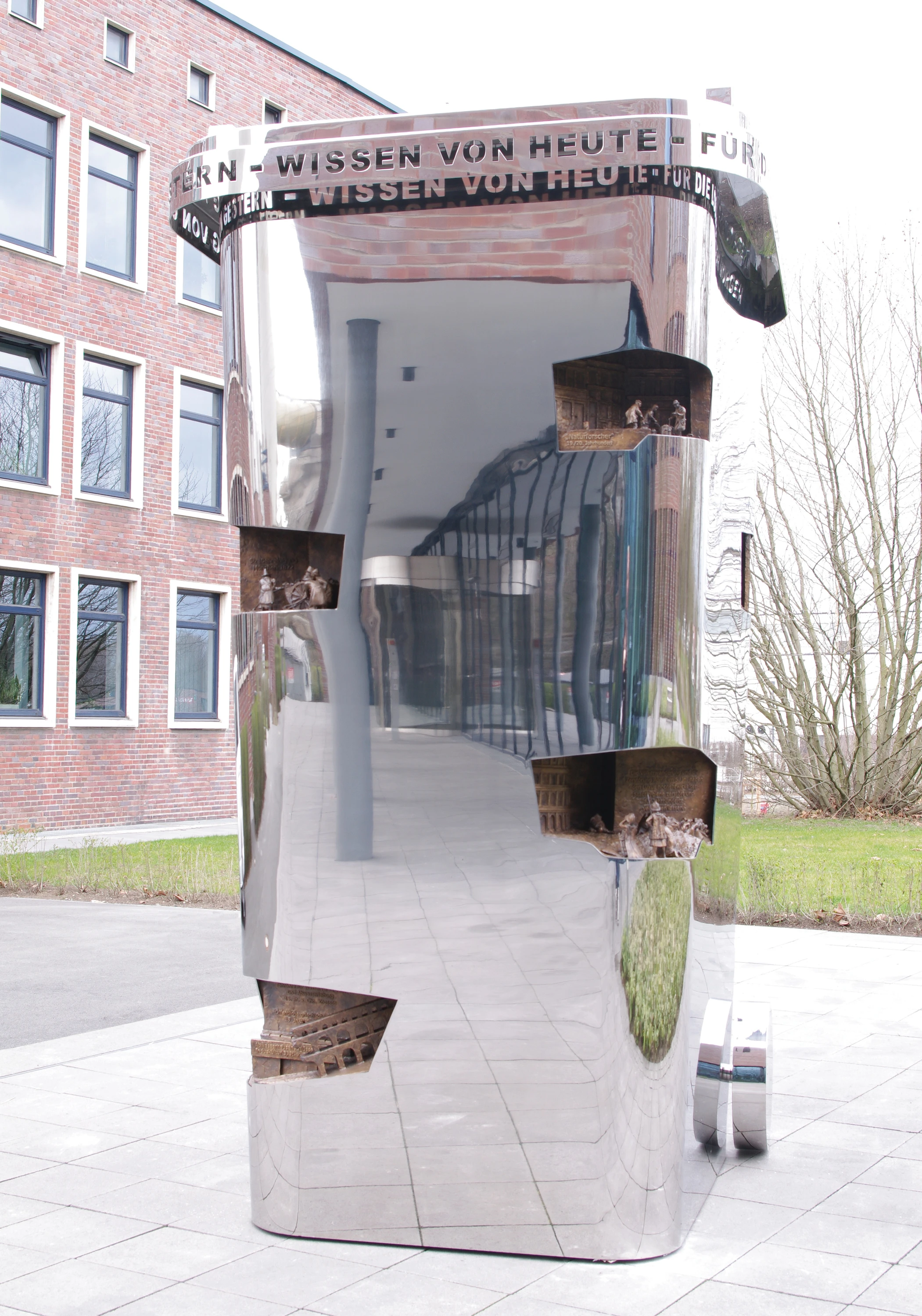
He prefers to work in bronze, but he also uses other materials, for example stainless steel for his large sculpture “From Past Experience …”. The art object, 2.70 metres tall and weighing 800 kilograms, puts waste disposal in a different light. Through the properties of the material, its forms and its size, Jürgen Ebert has succeeded in activating perception, attracting attention and arousing interest. The bronze objects worked into it allow the viewer to recognise connections that open up between milestones from the centuries before Christ to the present day of the 21st century.
The waste bin “MGB 240”, now a fixed part of our everyday lives, serves here – in an artistically refined form and with an encircling text – as a three-dimensional support for depicting the history of hygiene in humankind with all its highs and lows. Eight bronze objects in the differently cut-out corners of the stainless steel bin show the most important historical stages. They begin in 3700 BC with the Indus civilisation and reach up to today’s waste separation. Each bronze object is set into a cut-out of its own and so supports the arc of tension of the openings. On the encircling rim at the top is the core message in laser-cut lettering: “From yesterday’s experience – today’s knowledge – for tomorrow’s solutions”.
With his choice of materials, Jürgen Ebert pushed the artistic idea to the limits of what could be achieved by craft. To seemingly withdraw the 270-centimetre MGB in its monumental, three-dimensional form from reality (“dematerialise” it), and at the same time to make it appear as a mirror image of our understanding of the environment, he chose not bronze but highly polished stainless steel. The MGB was therefore made of stainless steel four millimetres thick and then polished. Through this extreme surface treatment the surroundings merge with the MGB as a mirror image, which asks the viewer to look at and engage with the object more closely. Ebert did not model the individual bronze objects in clay but in his favourite medium, wax. With this special material he could shape and express his thoughts with “playful ease”. Each historical scene is accompanied by text, so that the viewer can follow the artist’s thoughts and intentions in the eight bronze sculptures.
To reduce the contrast between the highly polished stainless steel and the darker, non-reflective bronze, he placed these objects in a fantastic lighting scene with small warm-white LEDs that the viewer cannot see. This stage-like presentation noticeably heightens the tension between the two materials – bronze and stainless steel – once more. With this work of art, Jürgen Ebert changed the standard of the original not only in size and weight, but also adjusted its proportions in detail for the sake of a flowing aesthetic balance.