
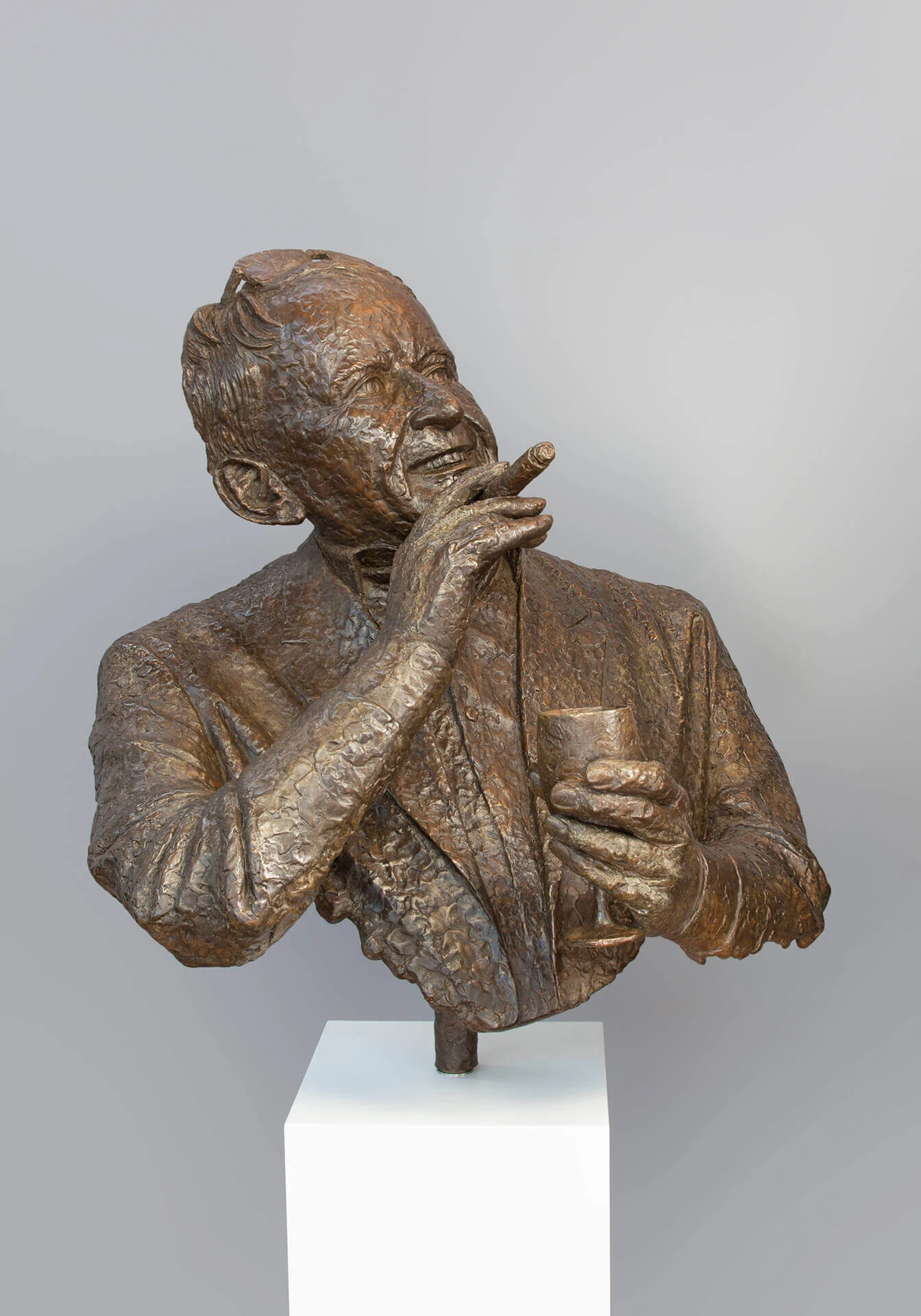
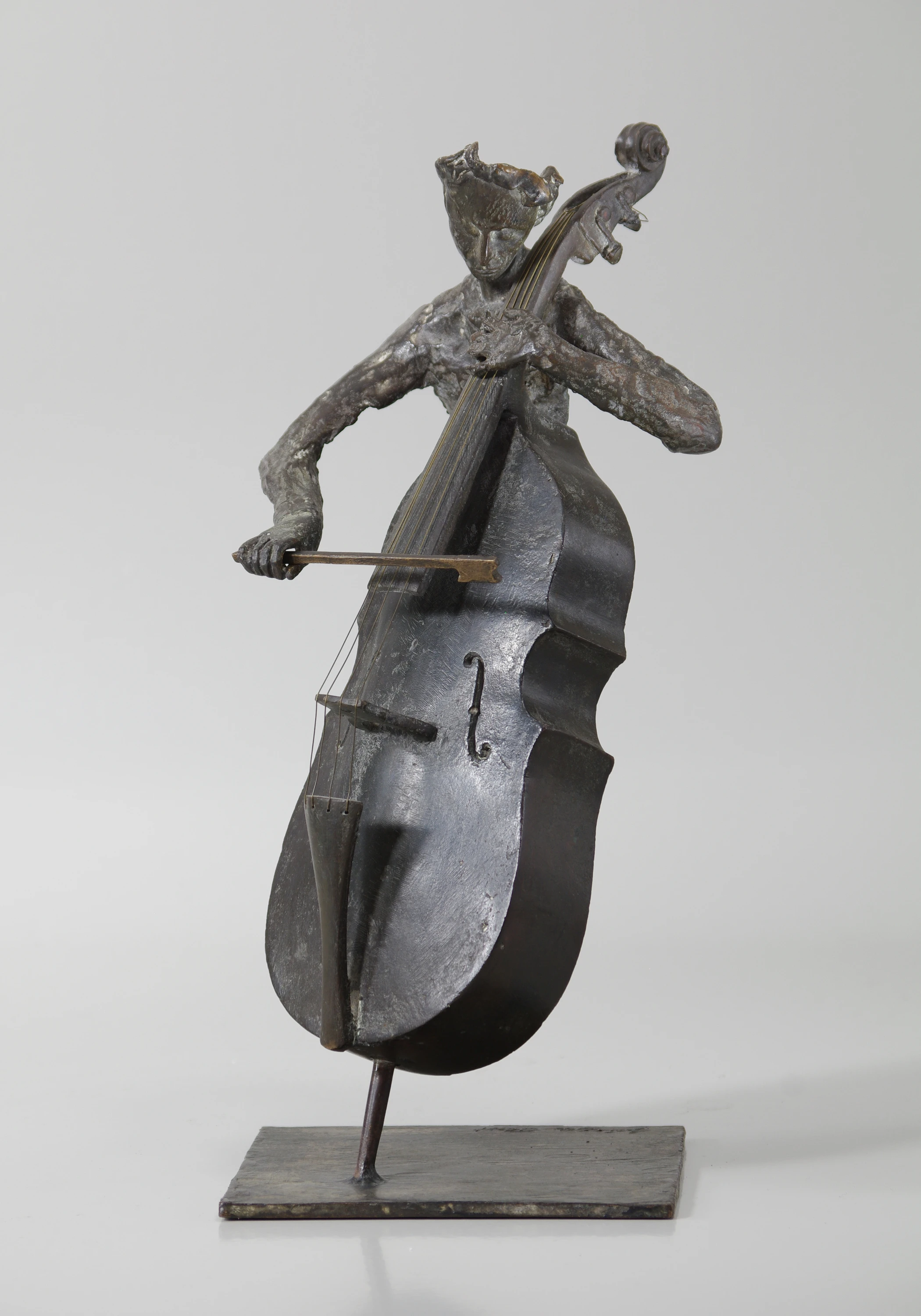
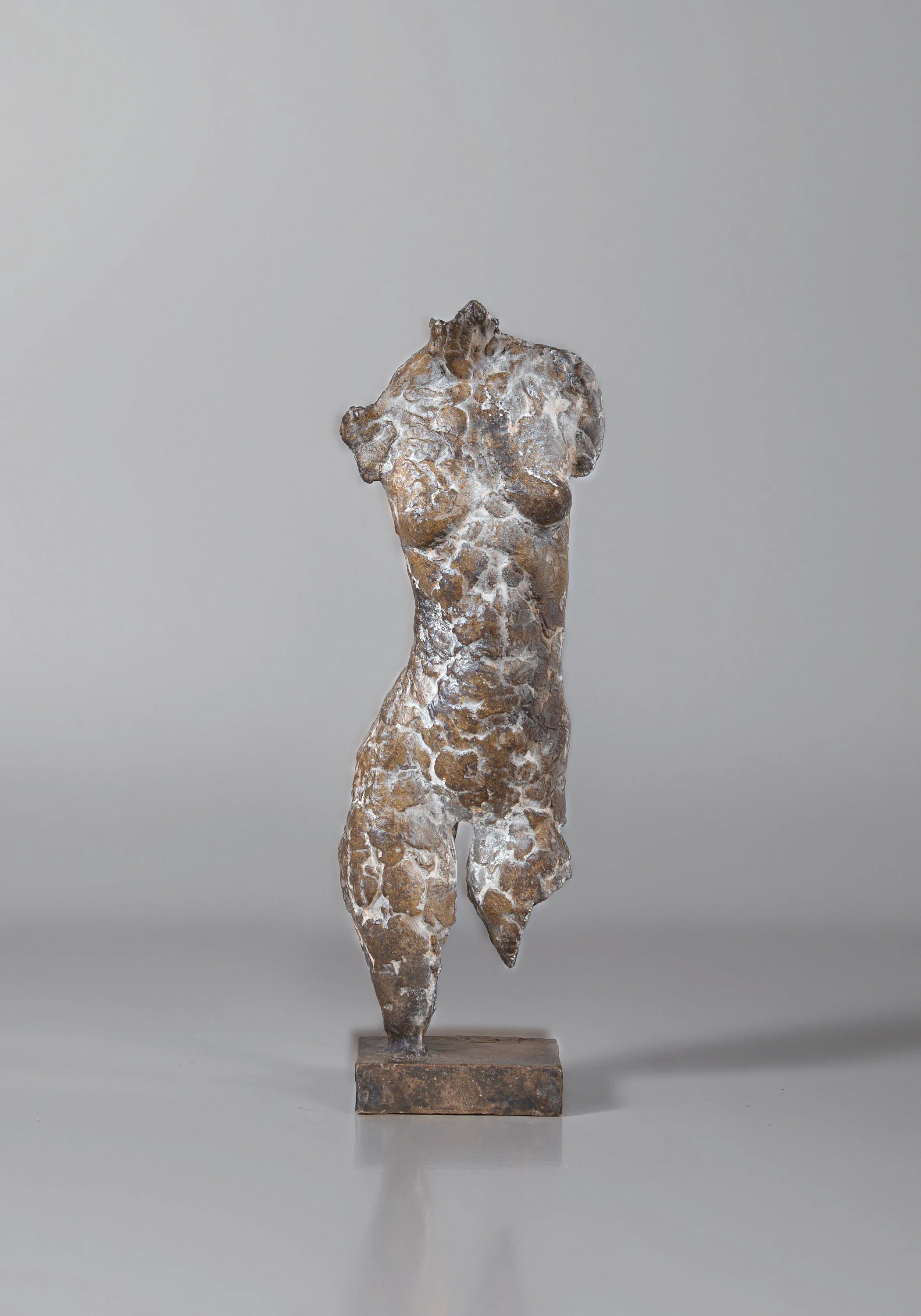
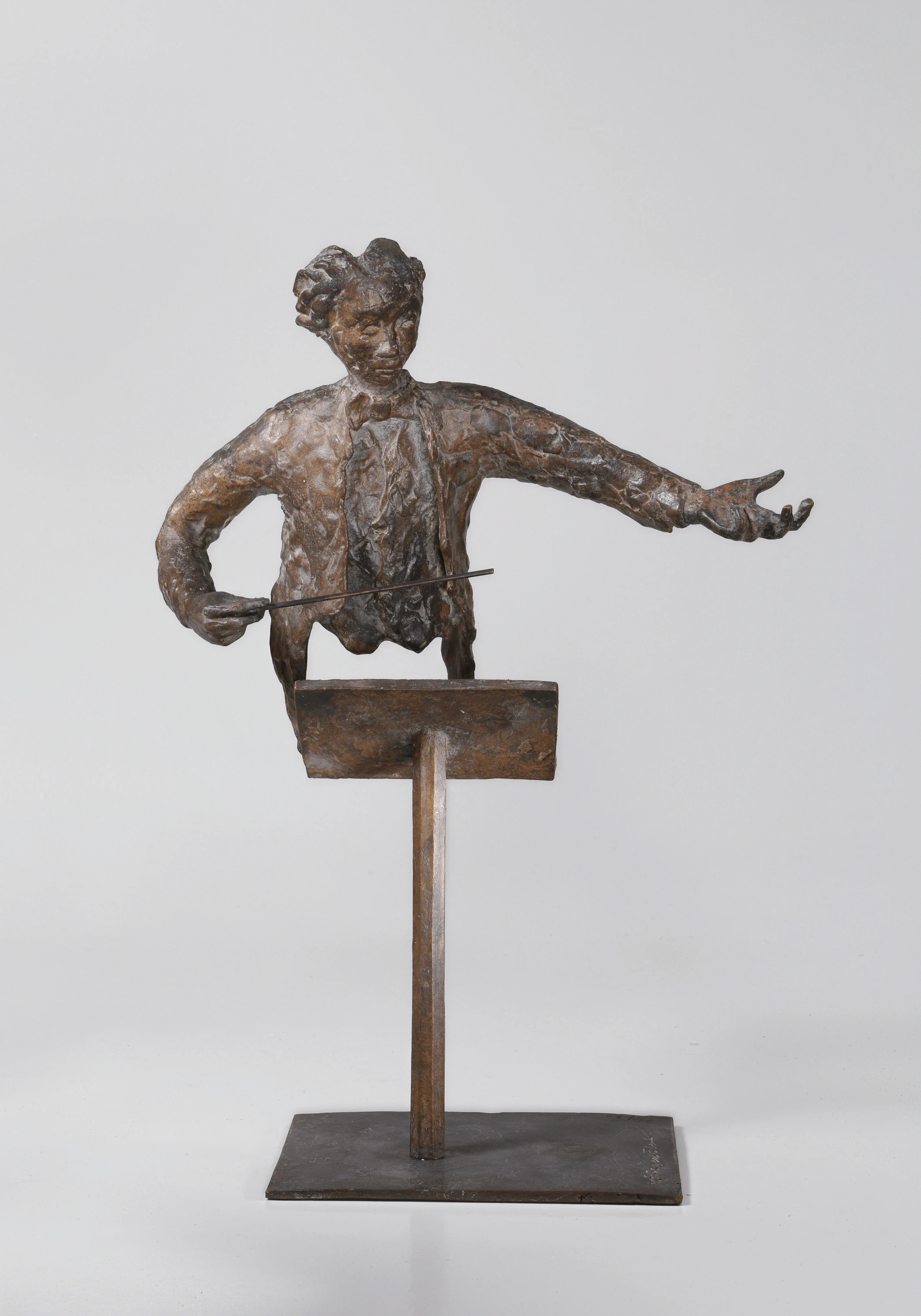
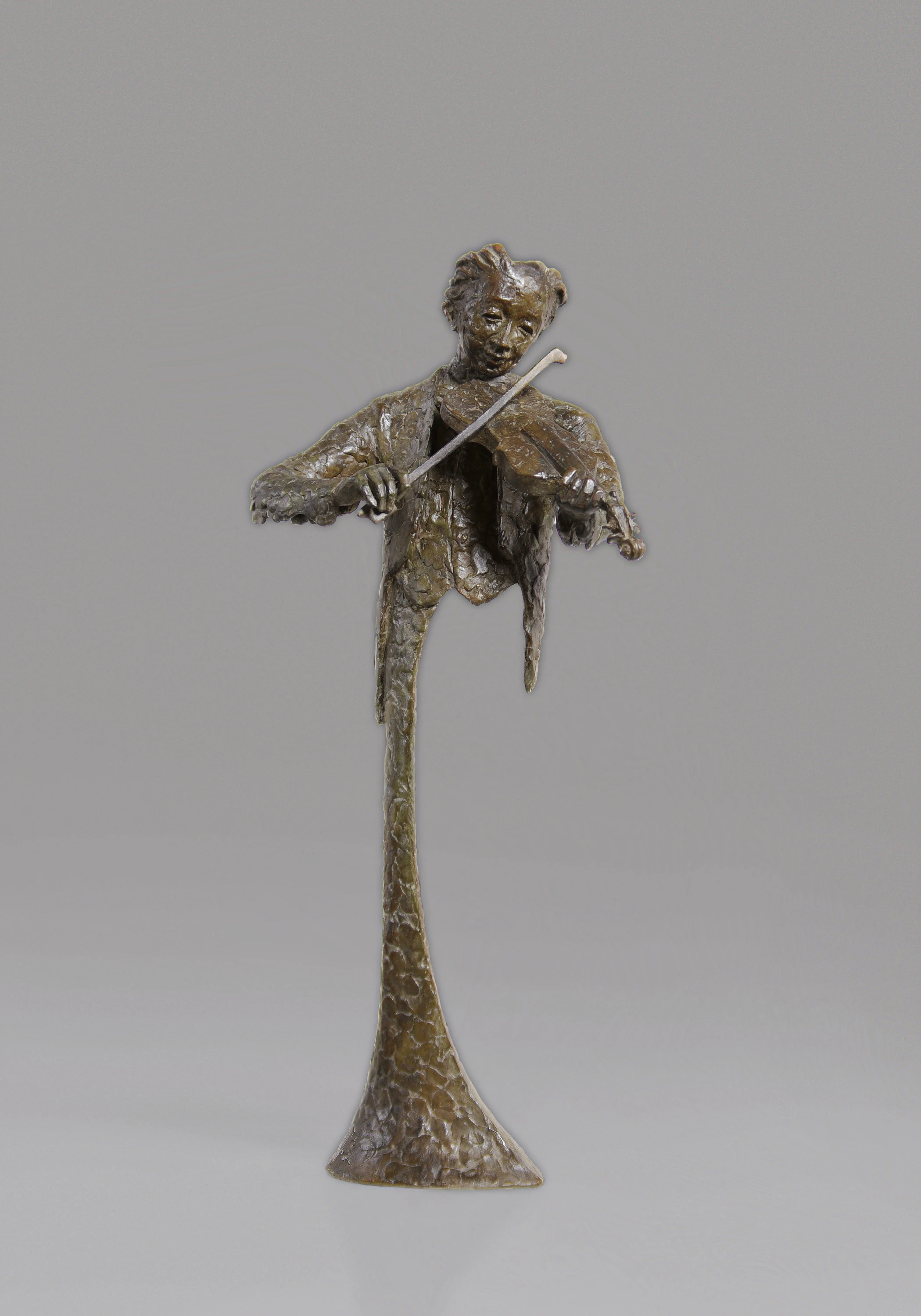
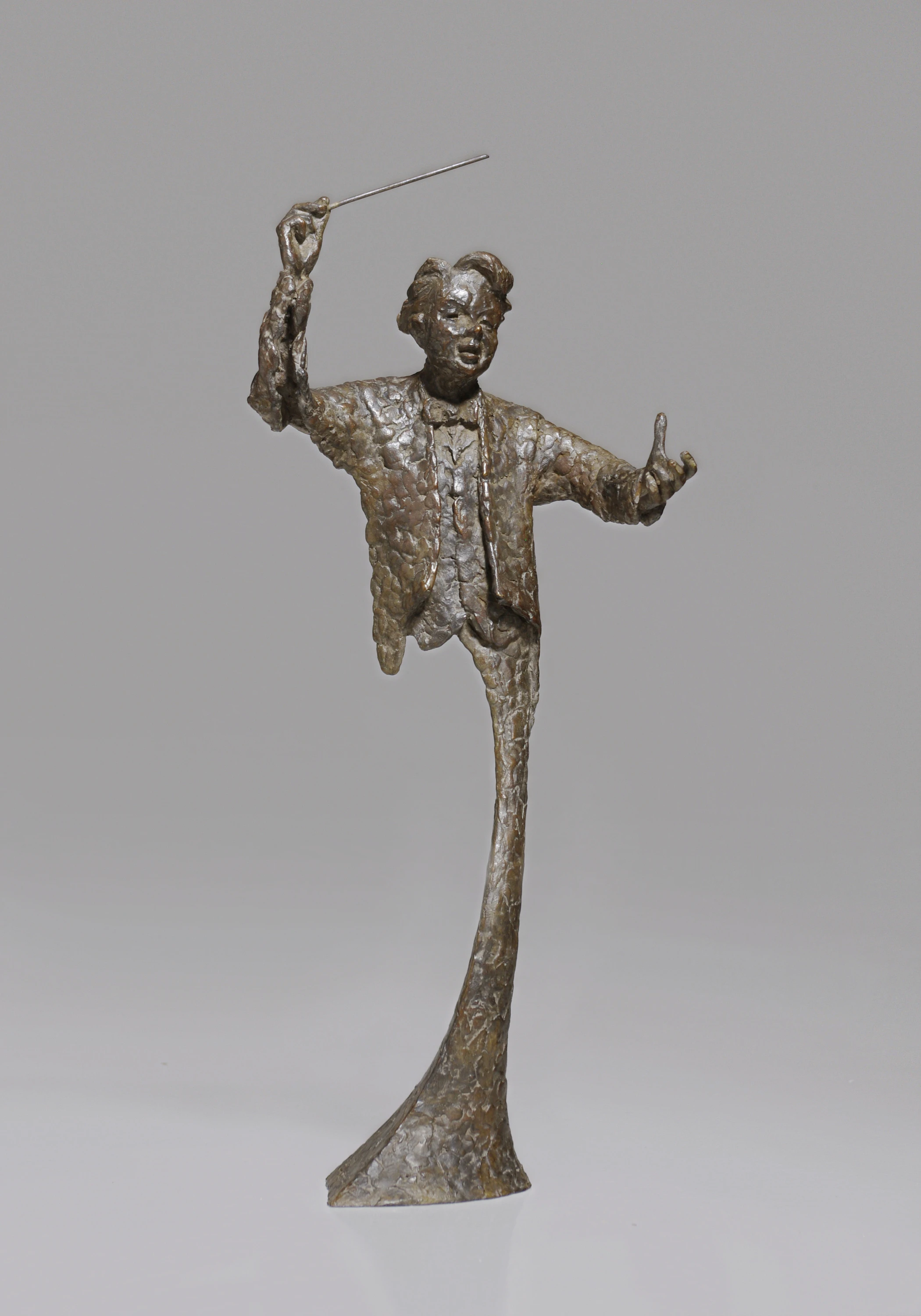
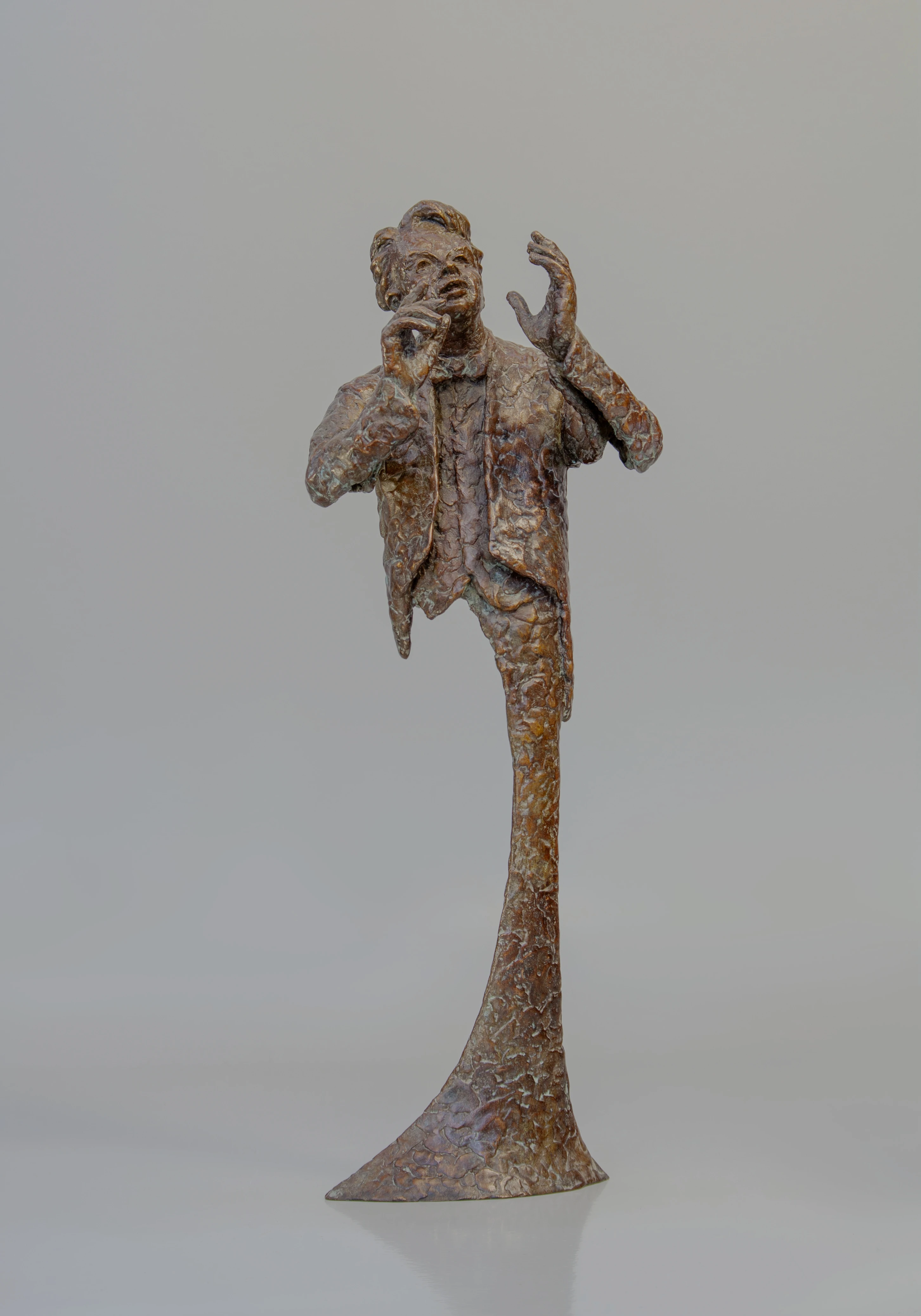
Already during his time at the academy in Munich, Jürgen Ebert created torsos from complete sculptures by removing parts of the body. In this phase it was important to him to create the torso from the originally modelled human figure, just as the historical sculptural fragments of various centuries reflect it. With the “Contrabass Player” and the “Conductor” began the phase of deliberately shaping hints of the human figure with prominent architectural elements, for the sake of the overall form.
“Vis à Vis”
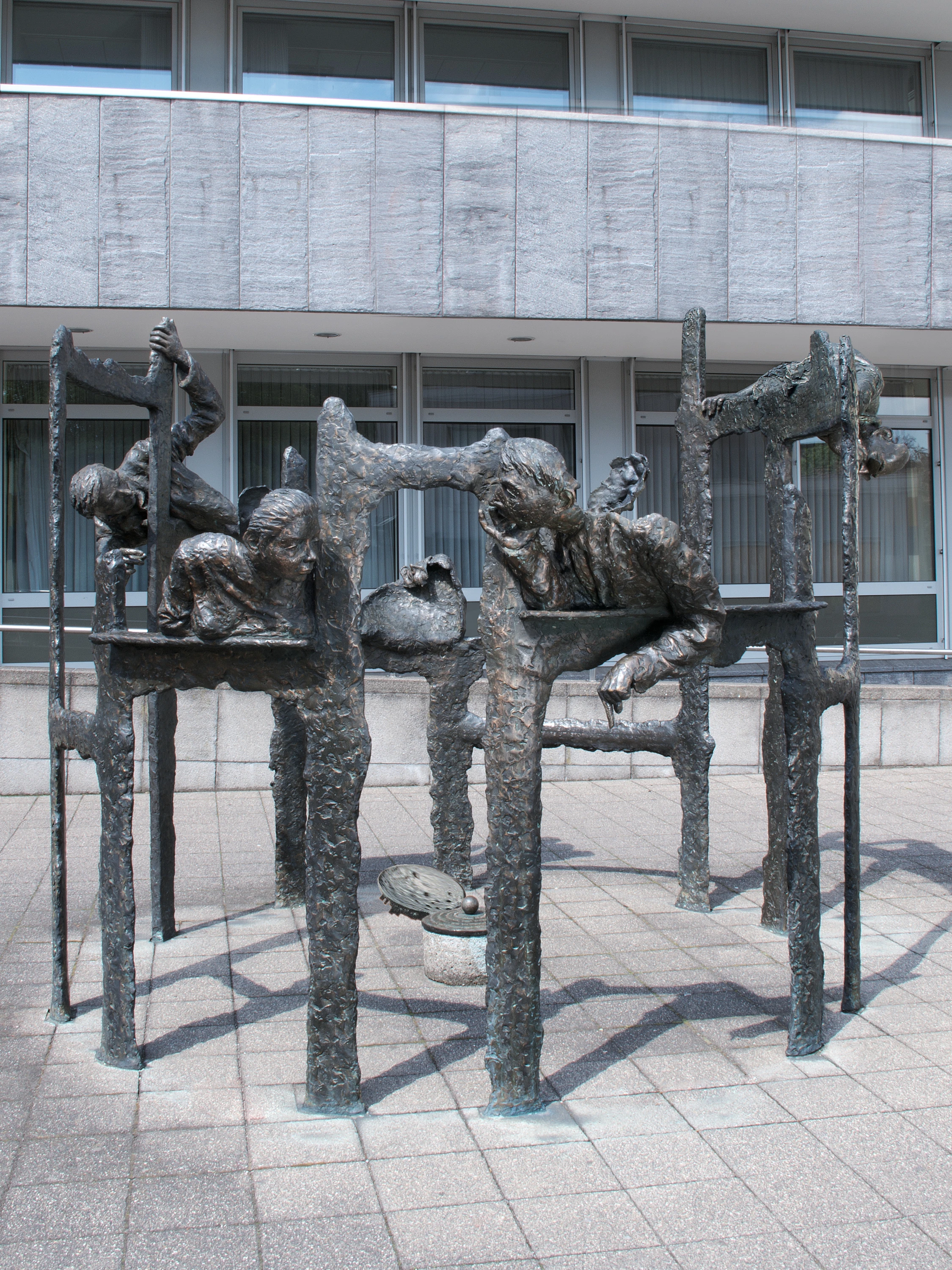
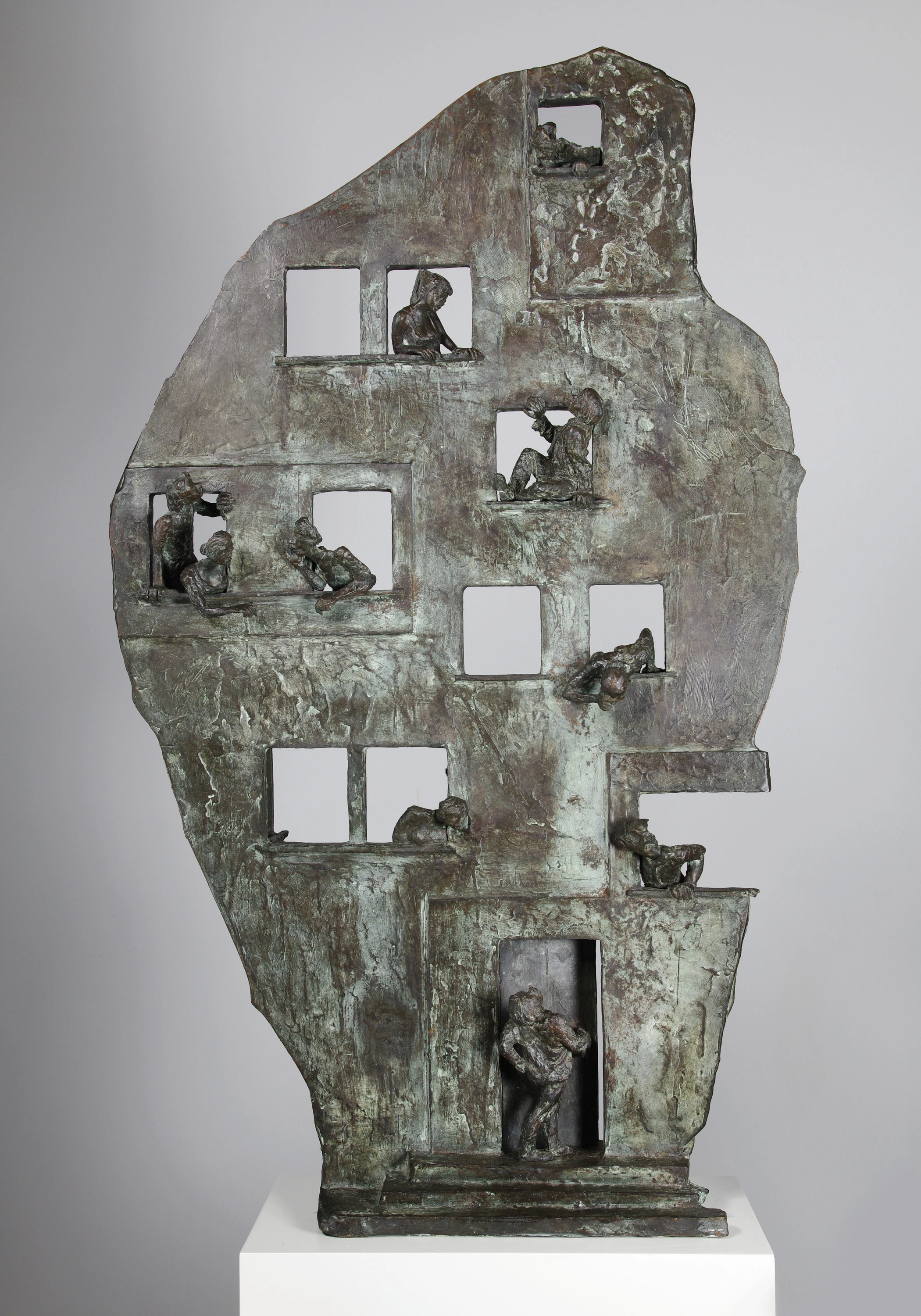
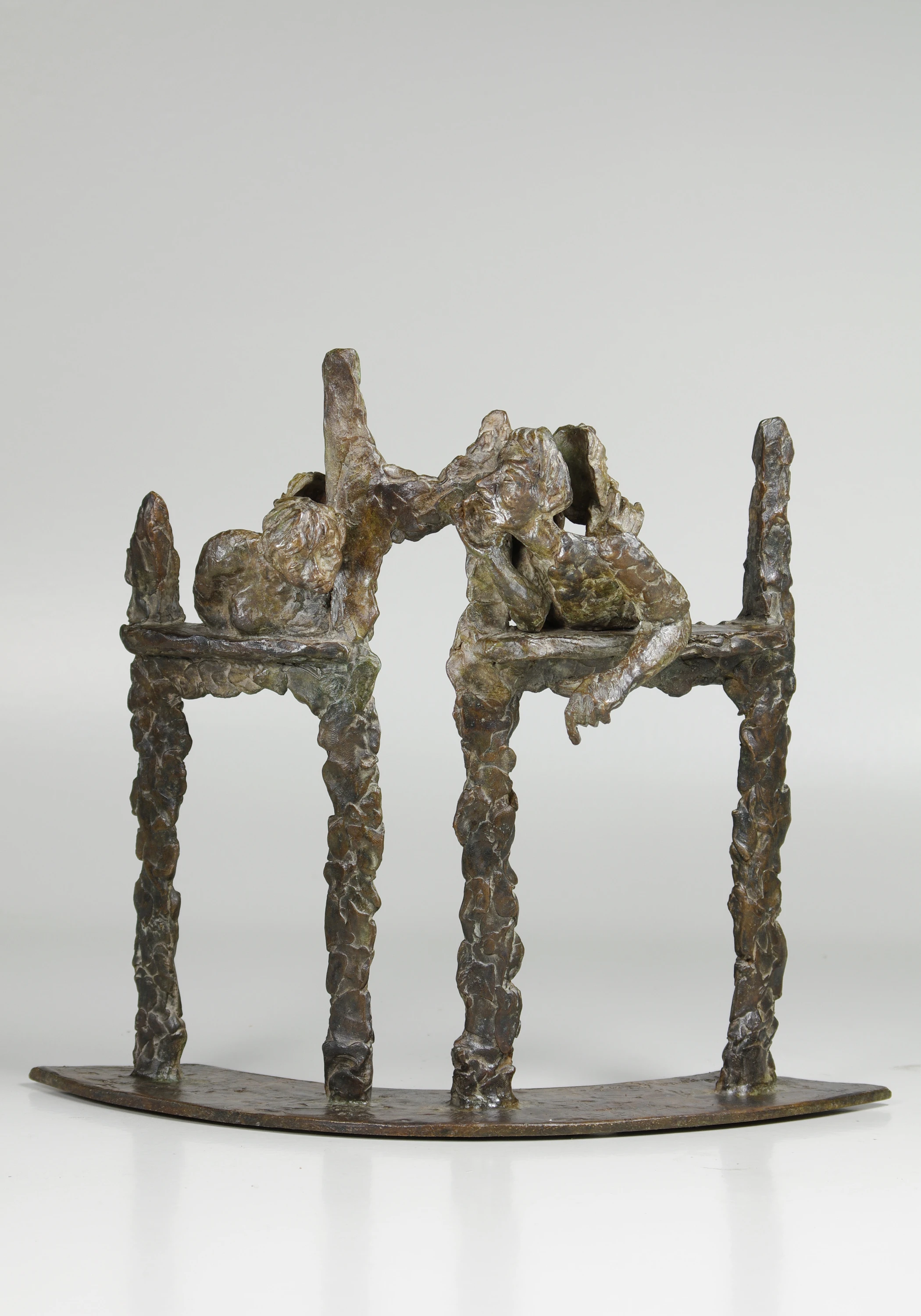
Building on these experiences, Jürgen Ebert modelled the free-standing full relief “Vis à Vis”. Figures communicate with one another from the window openings of the façade. Jürgen Ebert reduces the sculptures to what is essential for his intention. The fragmentary depiction shows human upper bodies that are open at the back and, like the façade, form only a spatial suggestion. The viewer does not notice this at first, but only on discovering the individual groups of sculptures, which are connected with one another in different ways and (thus) communicate. On closer inspection the viewer perceives a third dimension through the window openings. What is clearly shown figuratively at the front is mirrored at the back in abstraction, in a “scaffolding of communication”. Here, too, the artist leaves nothing to chance, but plays masterfully with his artistic possibilities and drives them towards new limits.
Text: Prof. Dr. Friedrich Loock, Director of the Institute for Culture and Media Management, Hamburg