
Jürgen Ebert had his first contact with sacred art in the studio of his father, who had created many larger-than-life religious sculptures in wood and stone for parishes in Germany and Canada. During his training at the State School of Sculpture in Oberammergau, these “childhood impressions” were influenced “negatively” by the woodcarving craft that had shaped this community since the Middle Ages. In its epigonic language of form, this woodcarving had been shaped by the monks of Ettal Abbey.
These impressions were so formative for Jürgen Ebert that he could not imagine finding artistic solutions of his own within this conventional world of ideas and forms.
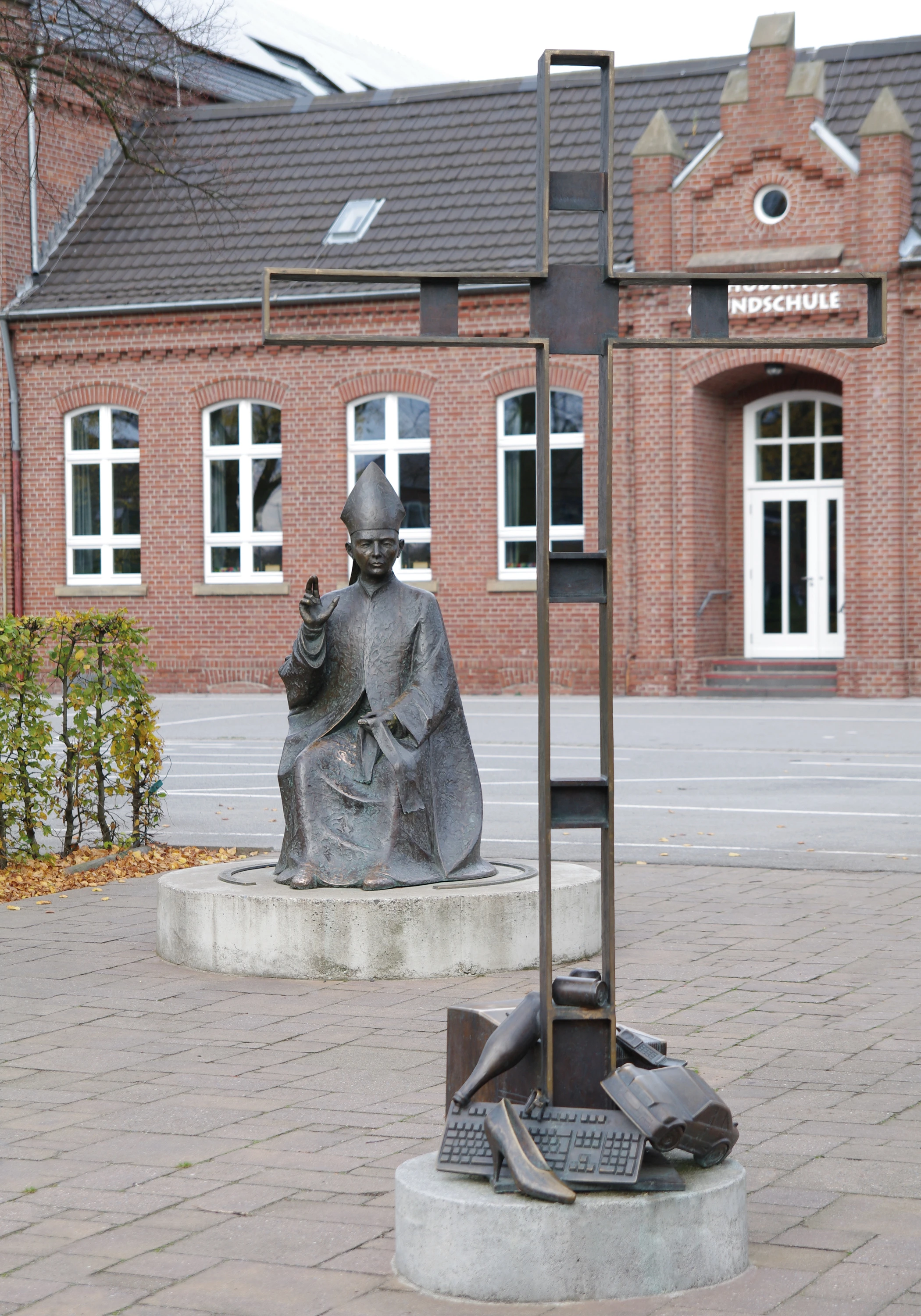
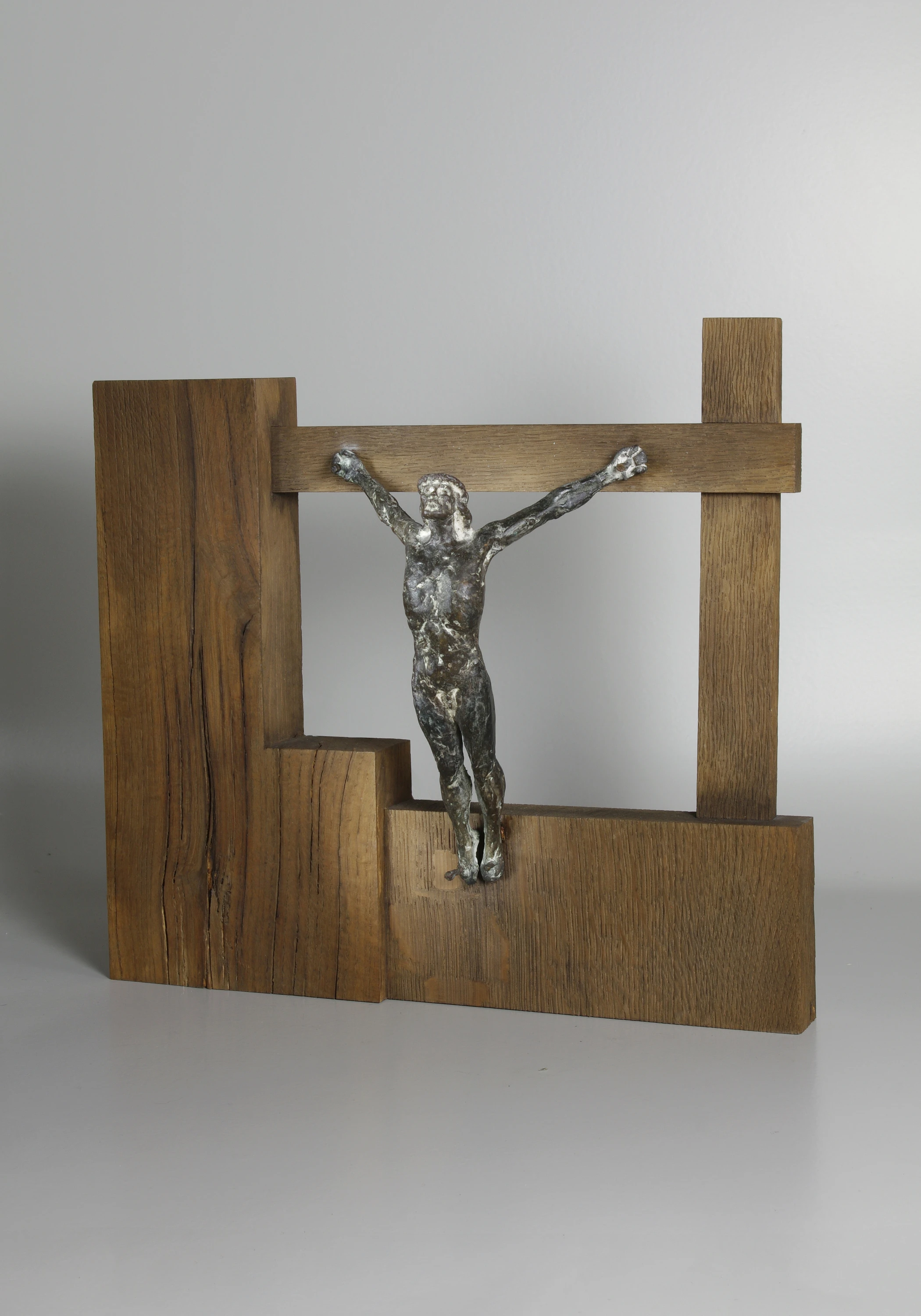
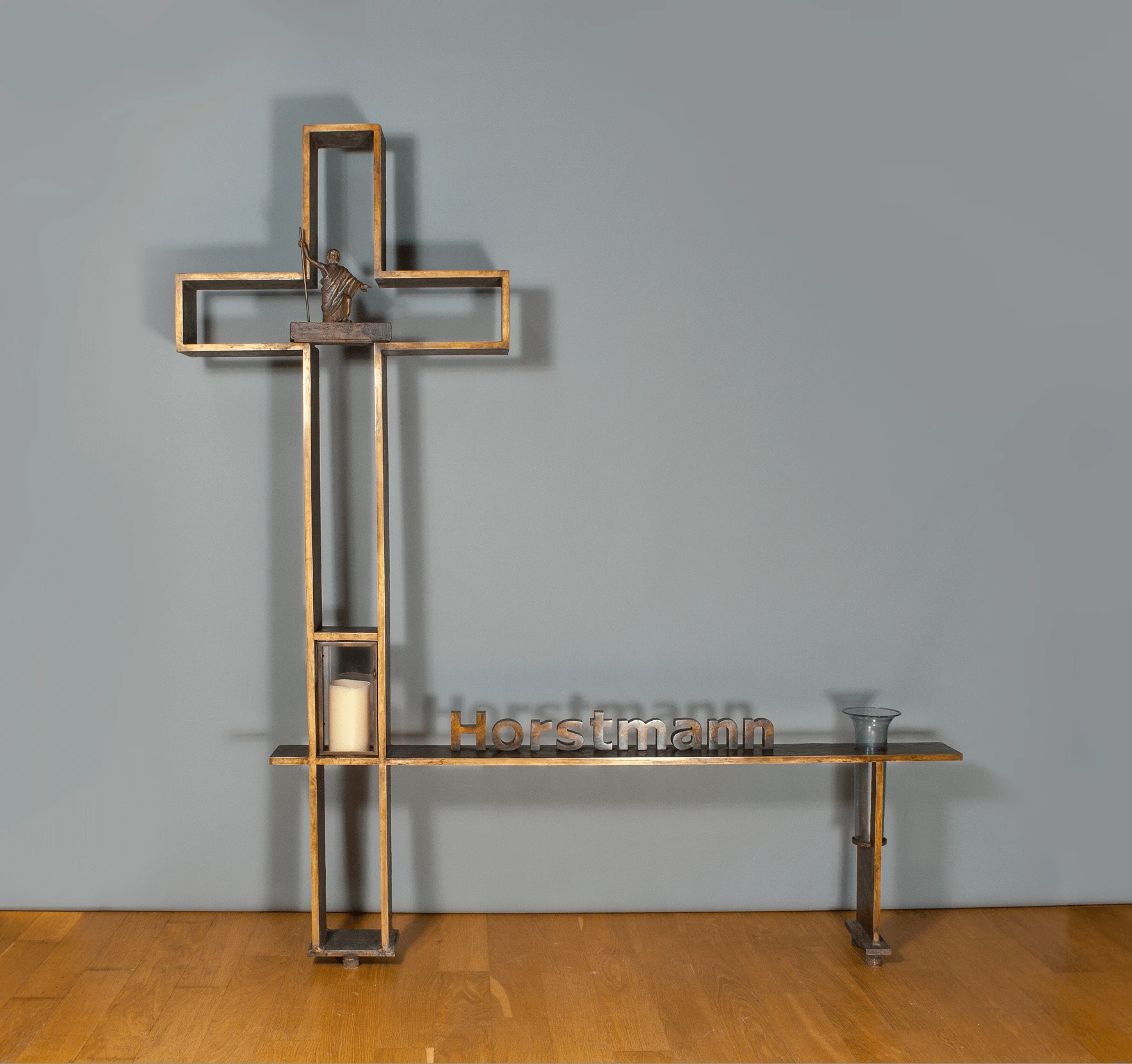
As a student, J. Ebert created his first symbolic cross, which through its inner shaping and openings, as well as the play of shadows, indirectly triples the symbol of the cross. On the side parts and the upper part, the body of Christ was replaced by three suggested cloths as a symbolic representation of the Trinity.
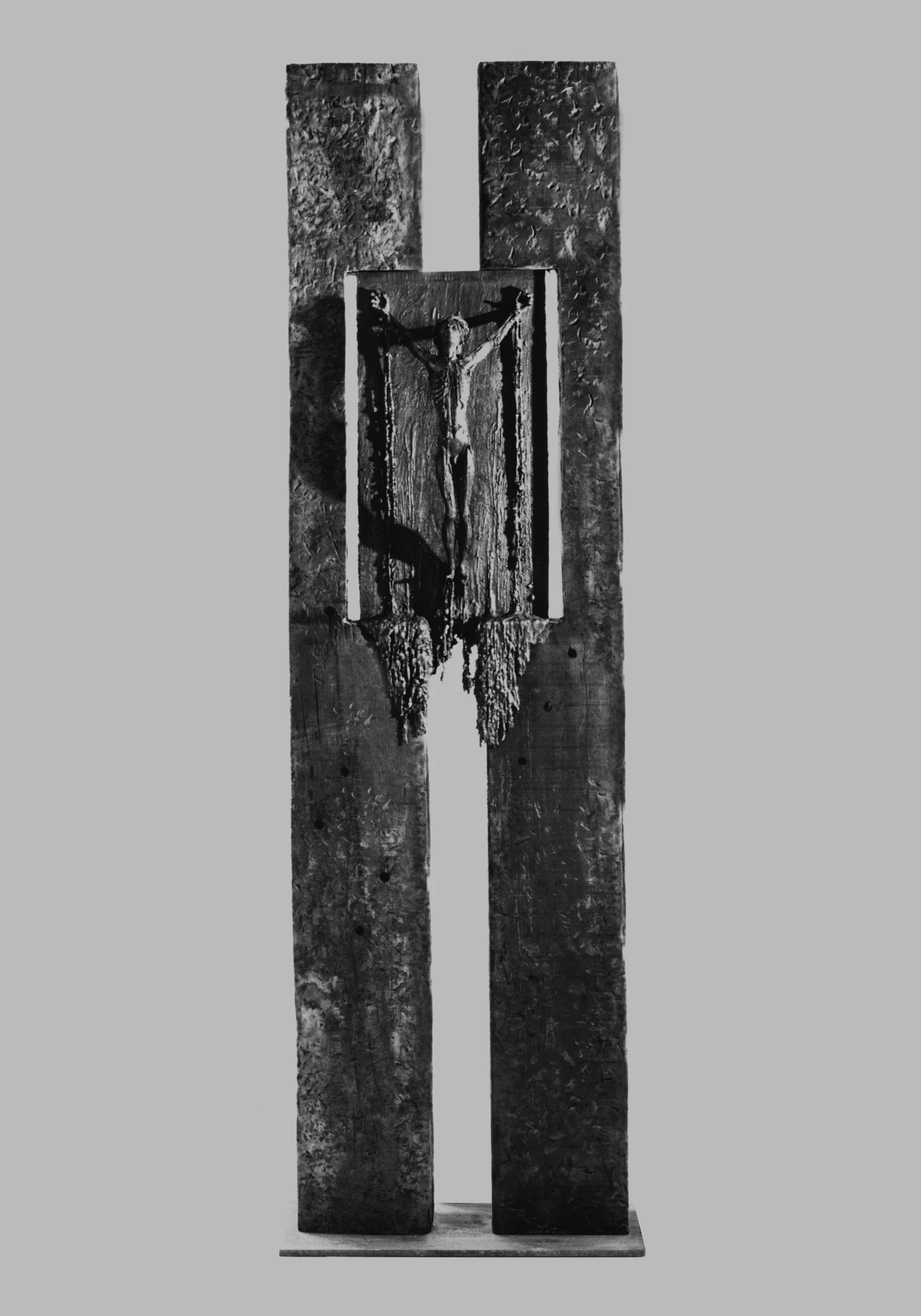
He never worked for a church, but created a sacred cycle for himself between 1982 and 1985, while coming to terms with his mother’s serious illness. Several depictions of the crucified Christ came about, from small sculptures to the tomb for his parents.
The crosses were not depicted in their original form. Either the openings suggest the cross in the form of incoming light (see the tomb), or they were merged into a spatial architecture. The body of Christ hangs freely in space and strives symbolically upwards into the universe.
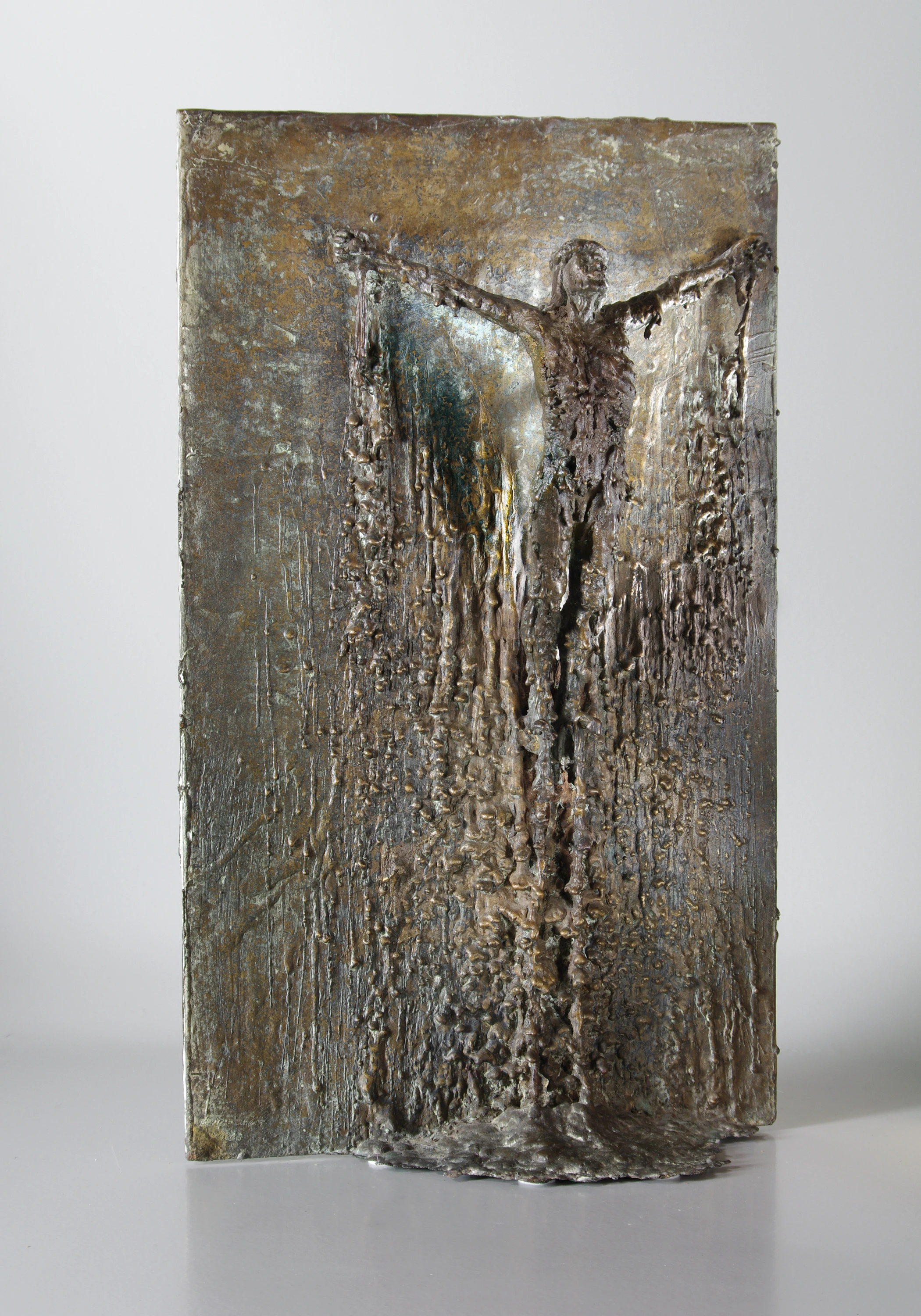
In the depiction of 1982, the sculpture of Christ hangs on a free-standing wall. The body is in the process of dissolving. Suggested drops of blood flow from the mortal shell and down the wall to the ground. The human body is broken open and reveals glimpses of its interior. Here, too, the upward-striving posture is the symbolic freedom – redemption for the human soul on its way to the transcendent.
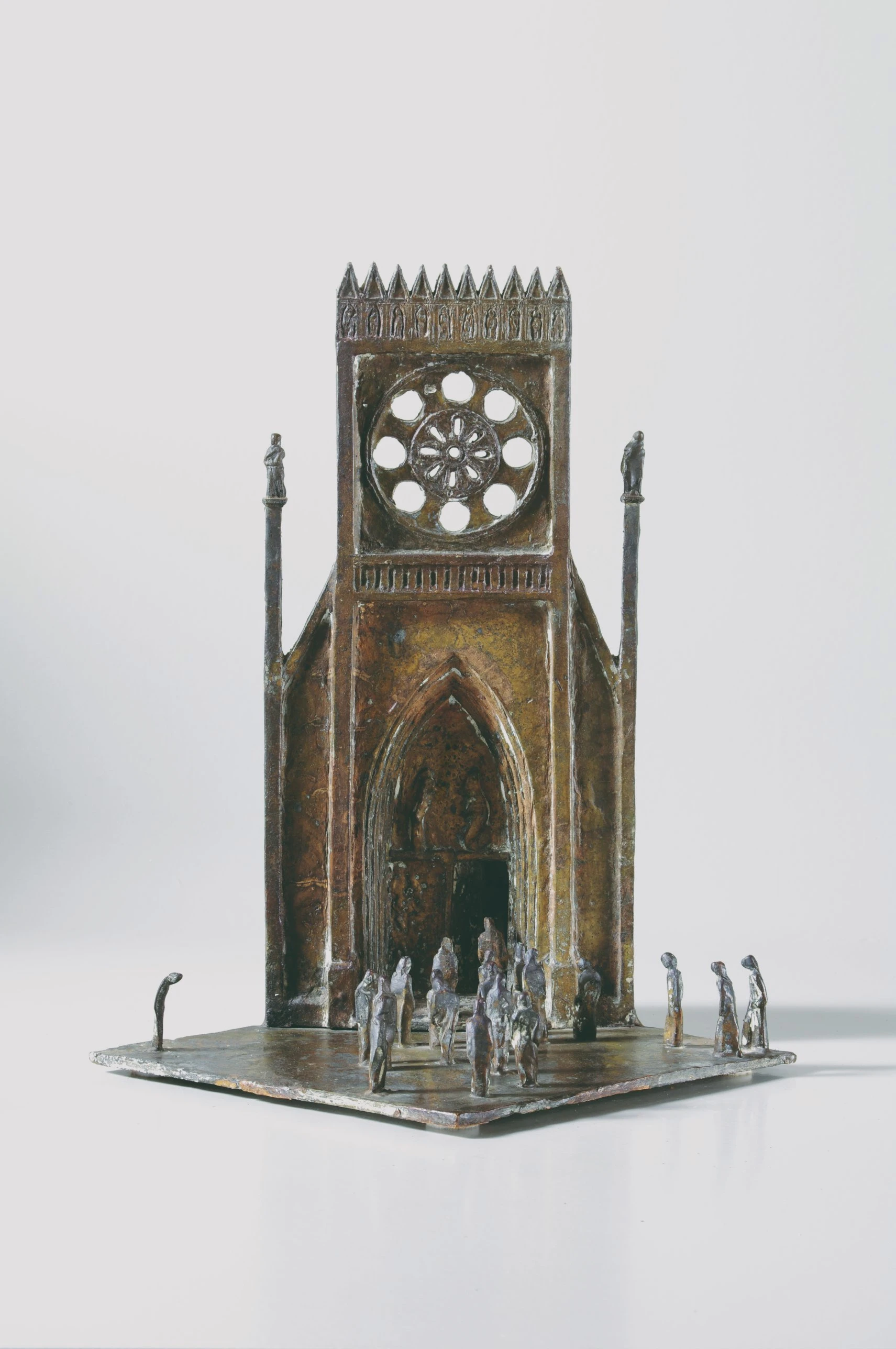
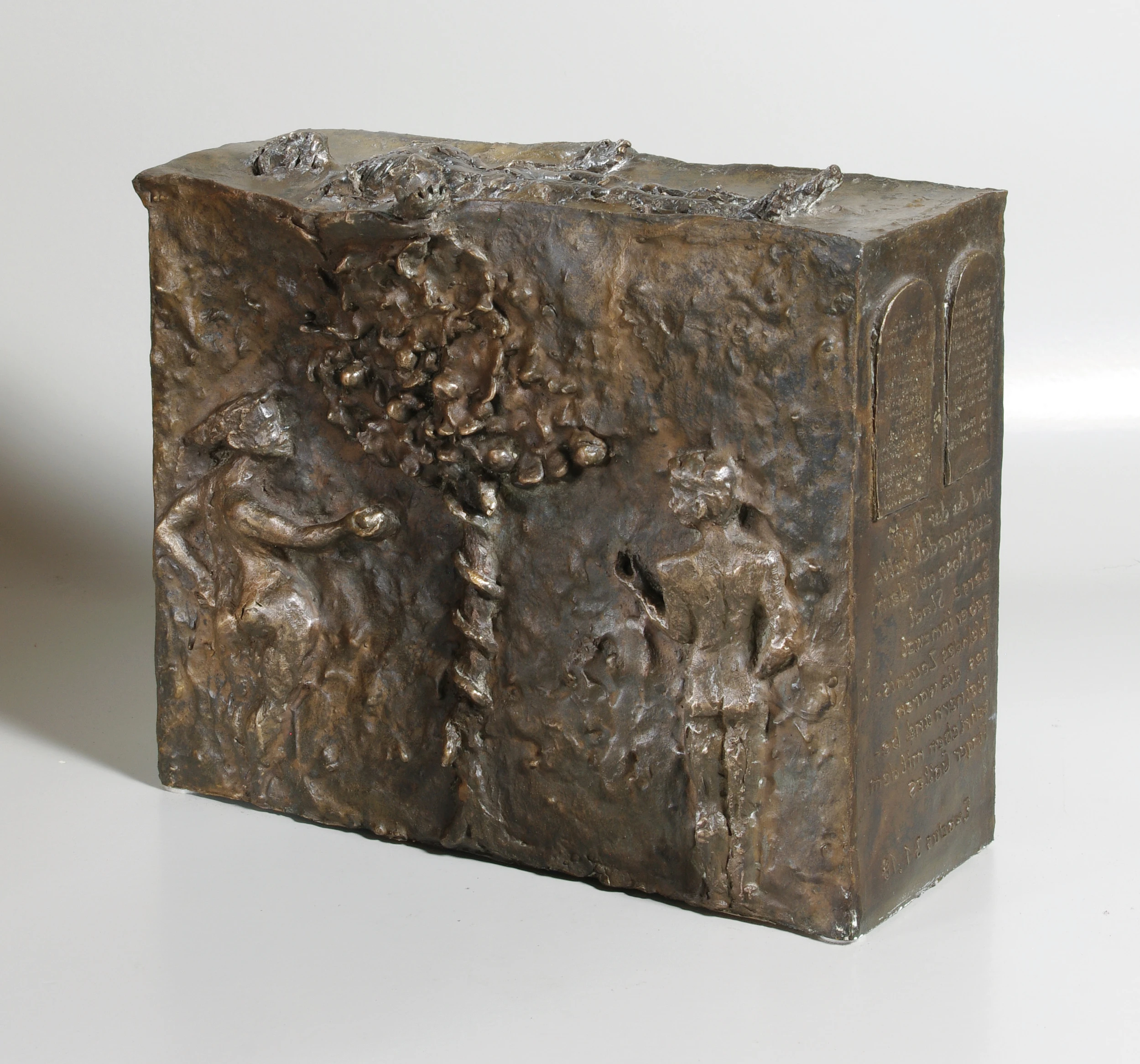
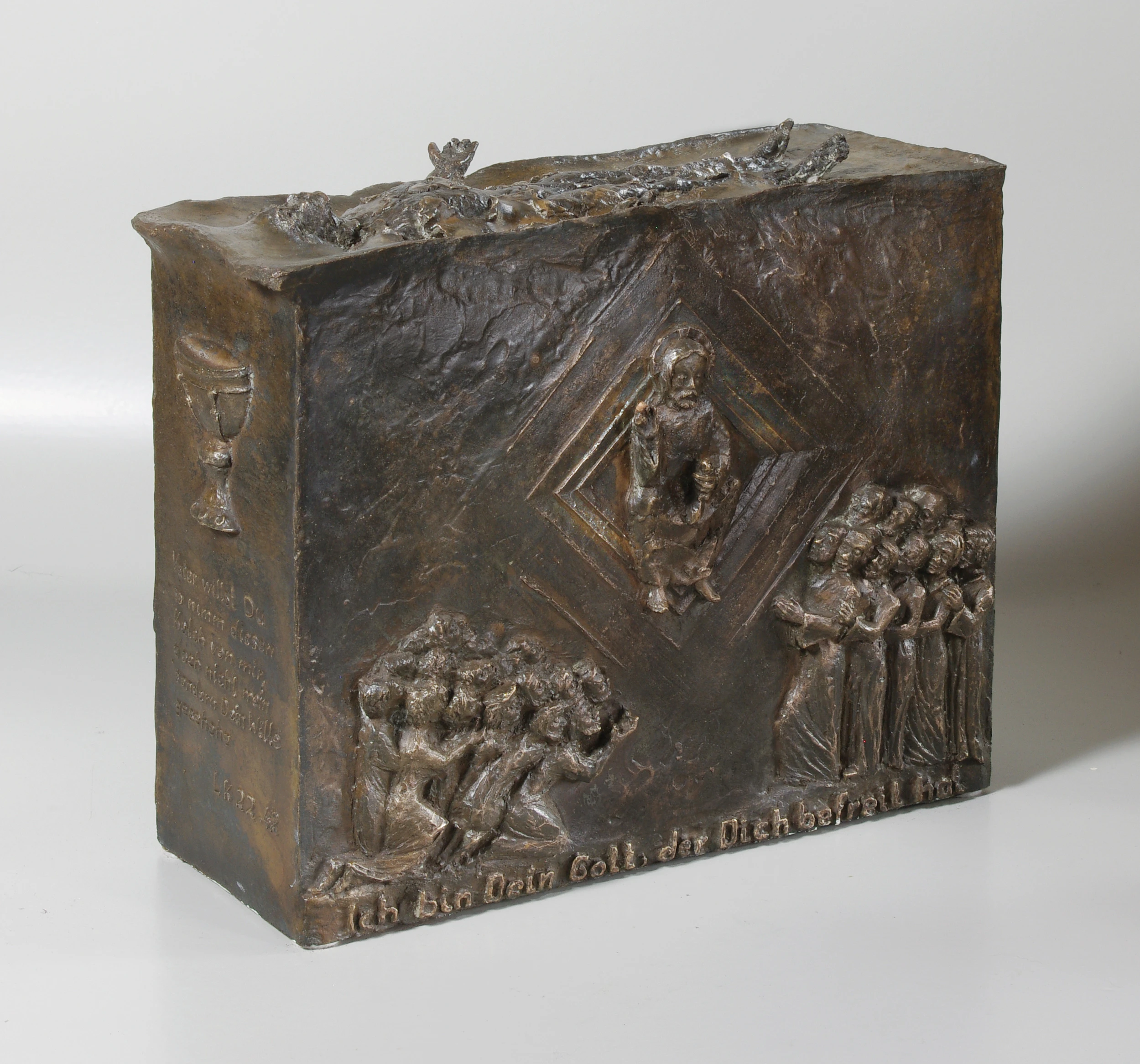
A timeless work of social criticism is the bronze sculpture “Going to Church”. The posture and gestures of the small human figures in front of the Gothic church portal reflect the range of religious affiliation in our society, from deep to hypocritical. His sacred works conclude with a tabernacle in the form of a free-standing cube under the theme: “I am your God, who has set you free.”